FreeCell lesson · rules, supermoves and deal numbers
How to Play FreeCell
FreeCell deals every card face up, so the challenge is not uncovering hidden information—it is managing temporary space. Four free cells and any empty tableau columns let you rearrange longer sequences, but every occupied space reduces what you can move next. This lesson explains the rules, derives the stack-move formula, and gives you a real three-card supermove to perform on Microsoft deal #1113.
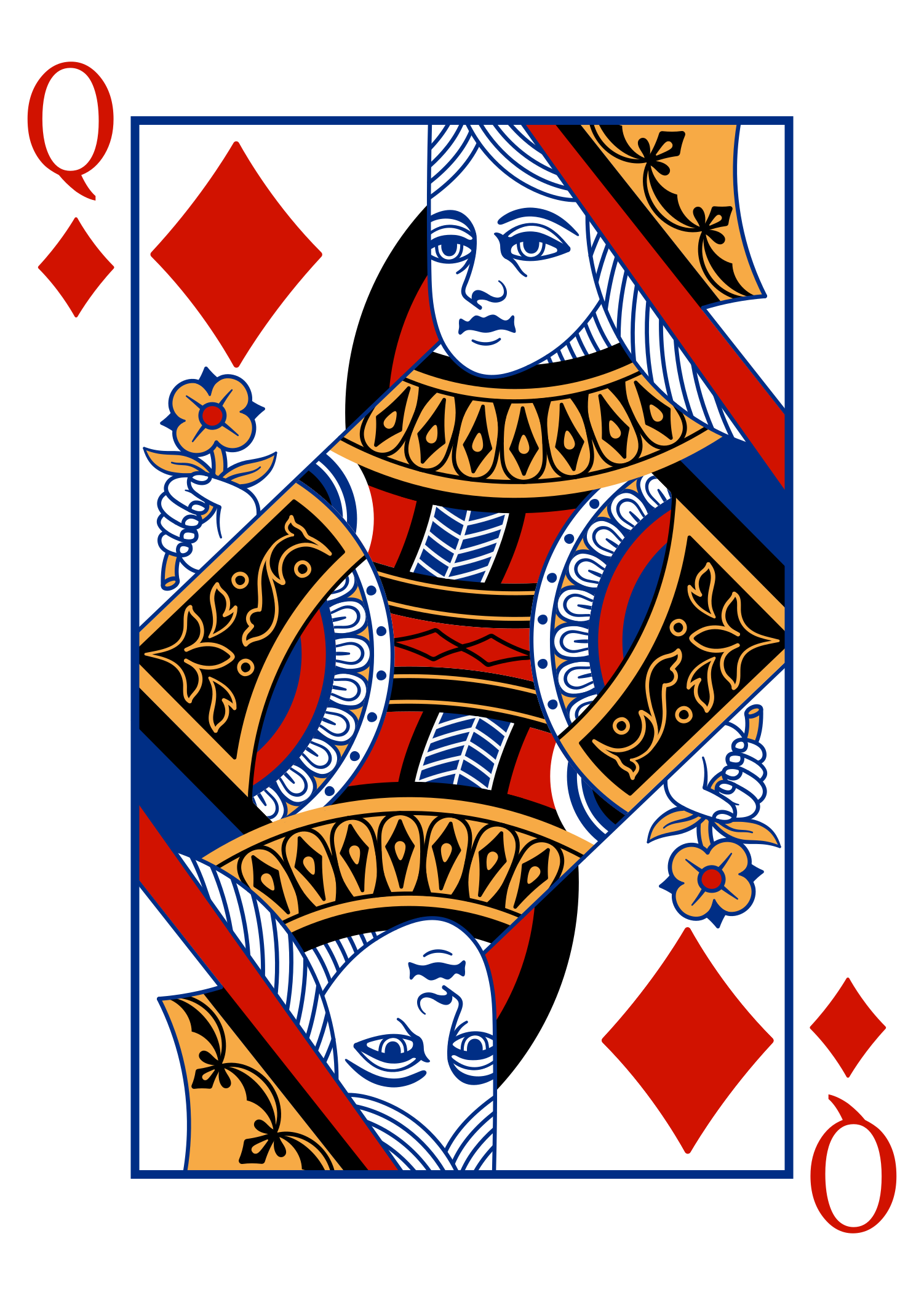
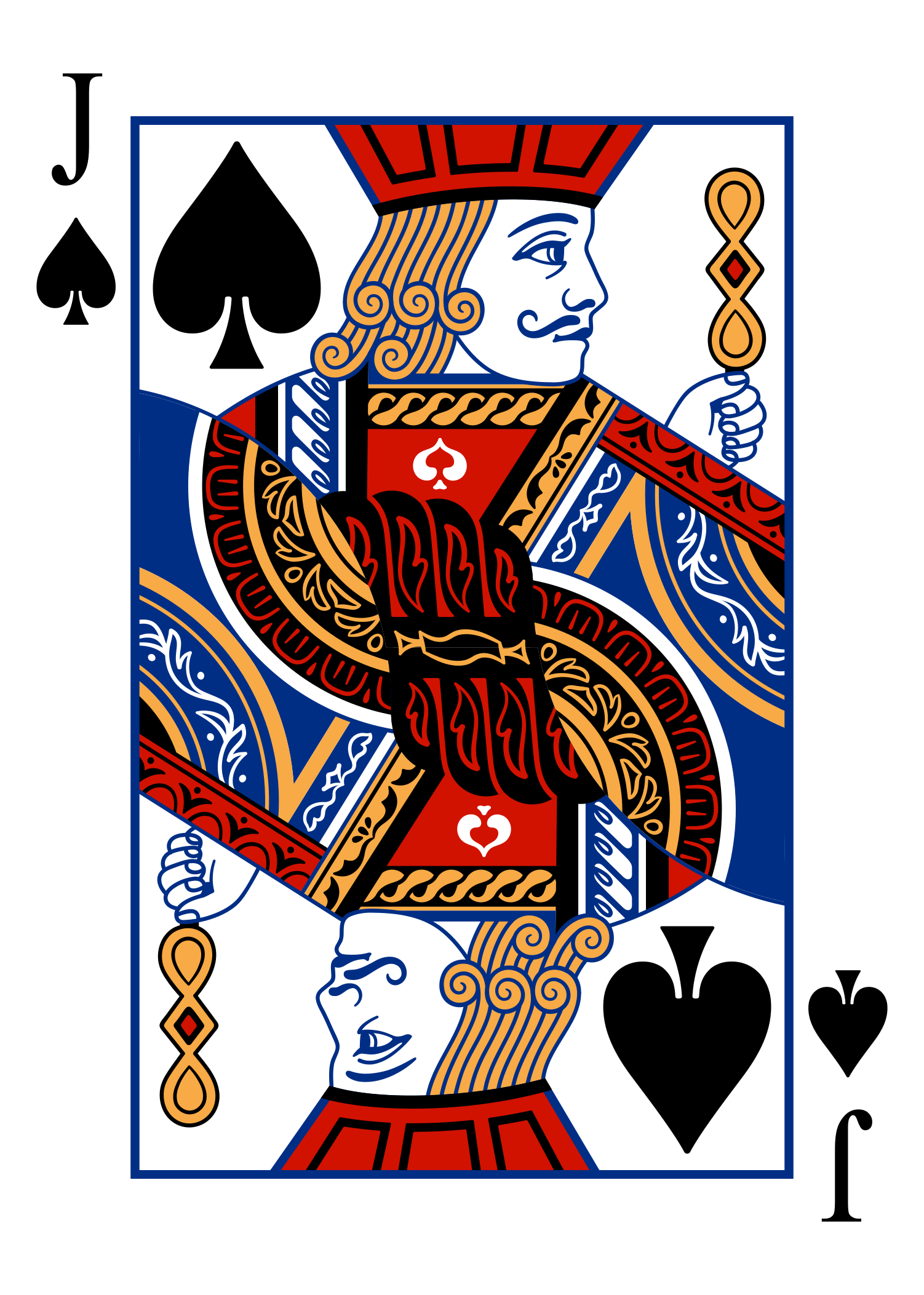
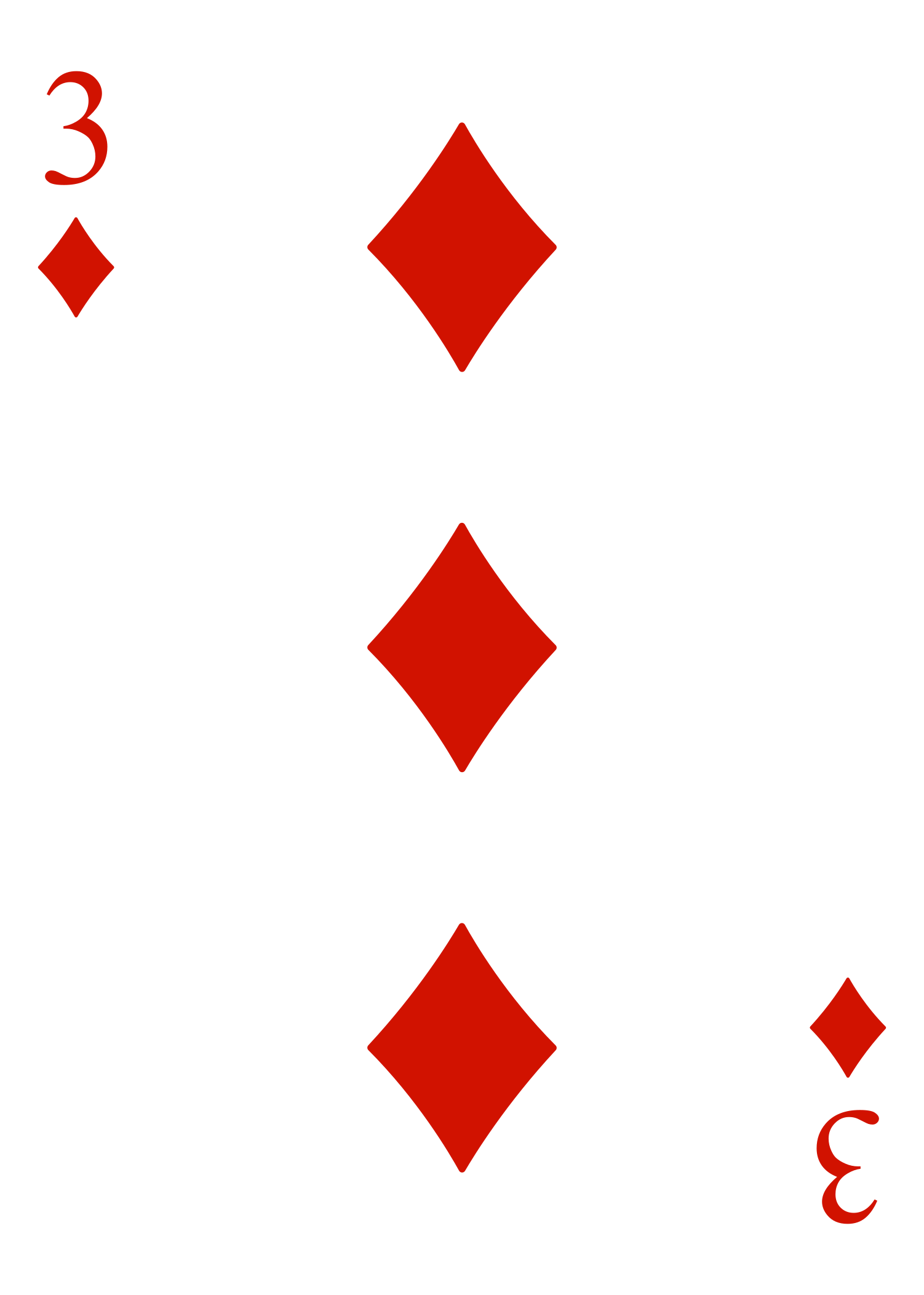
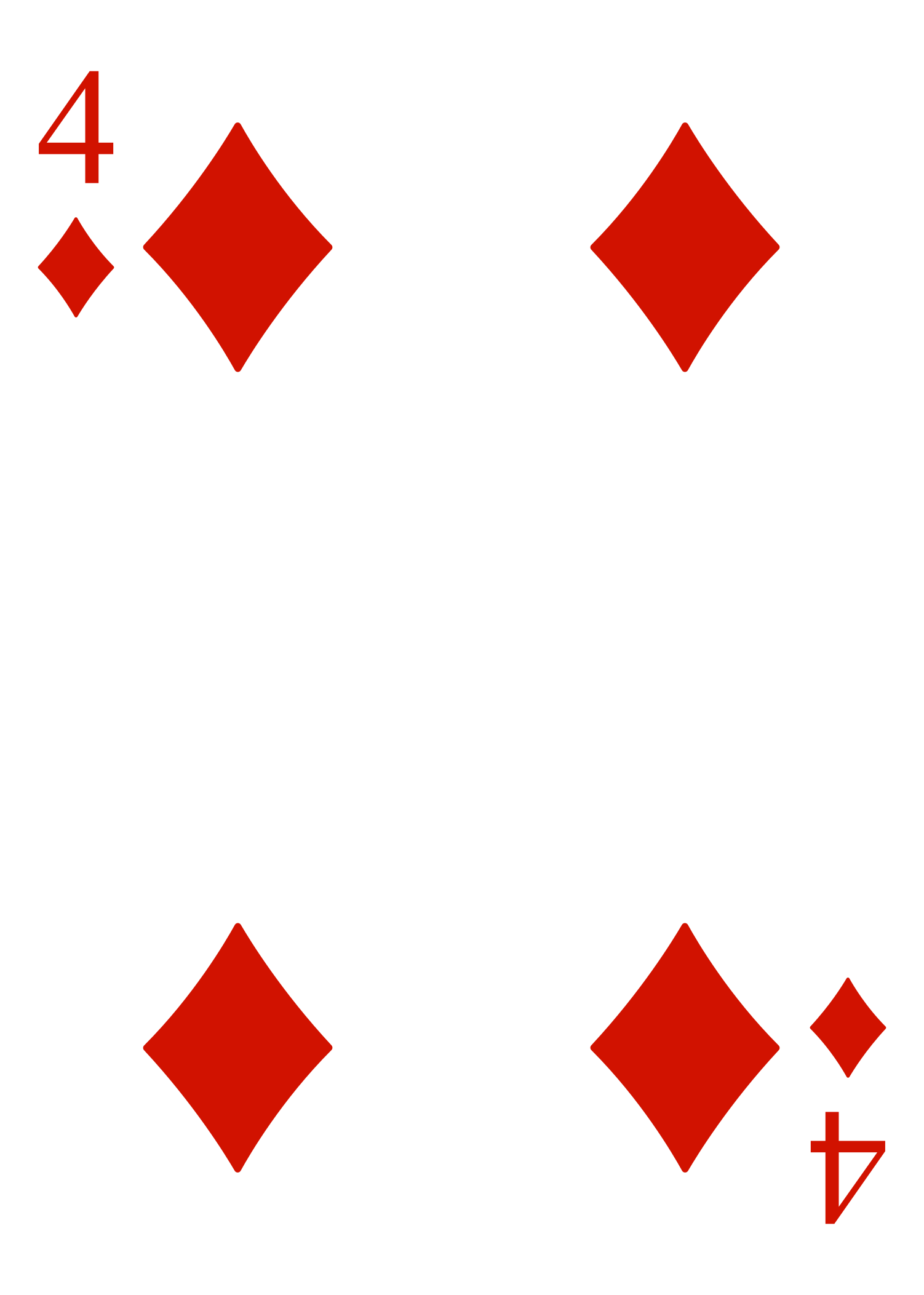
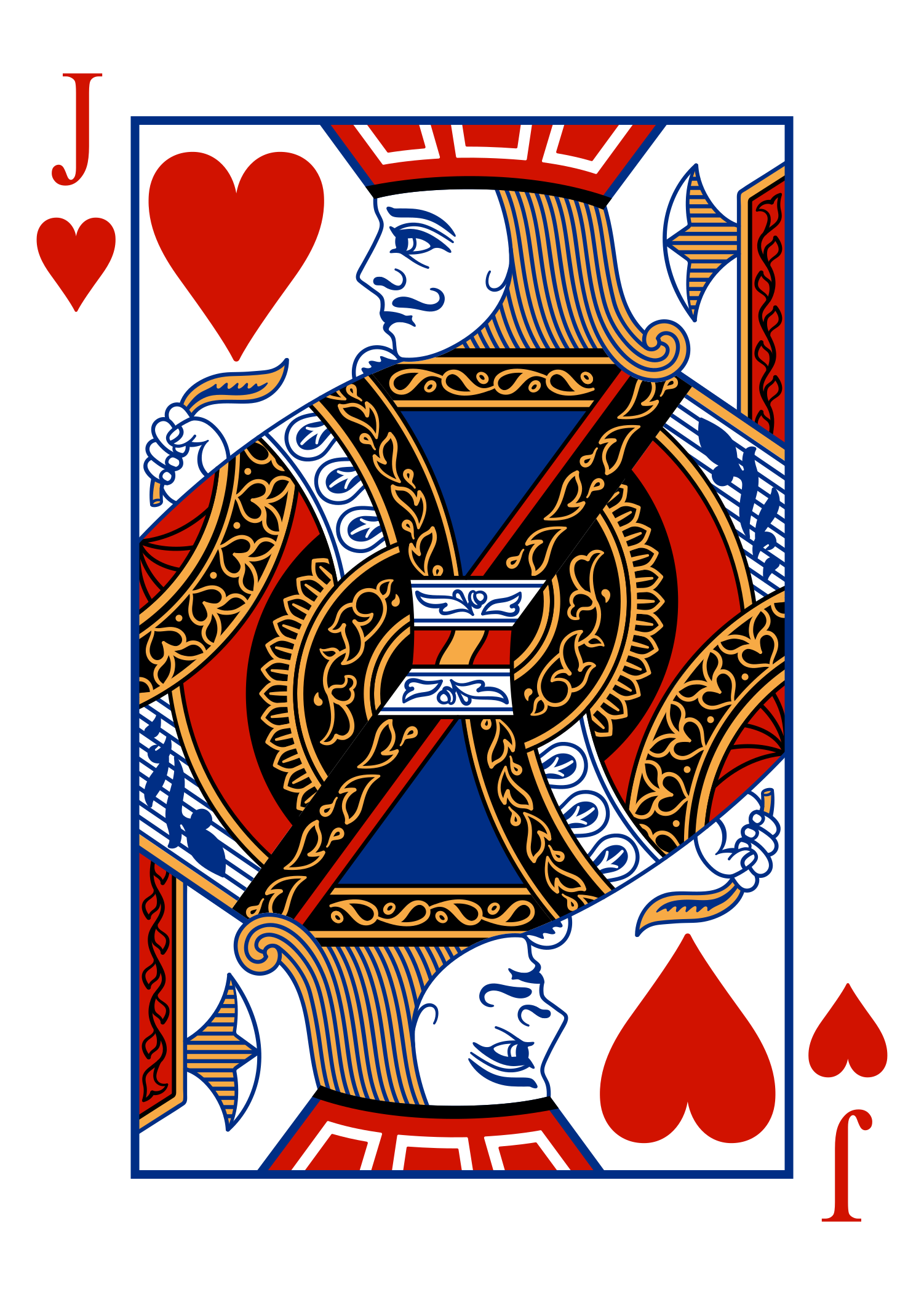
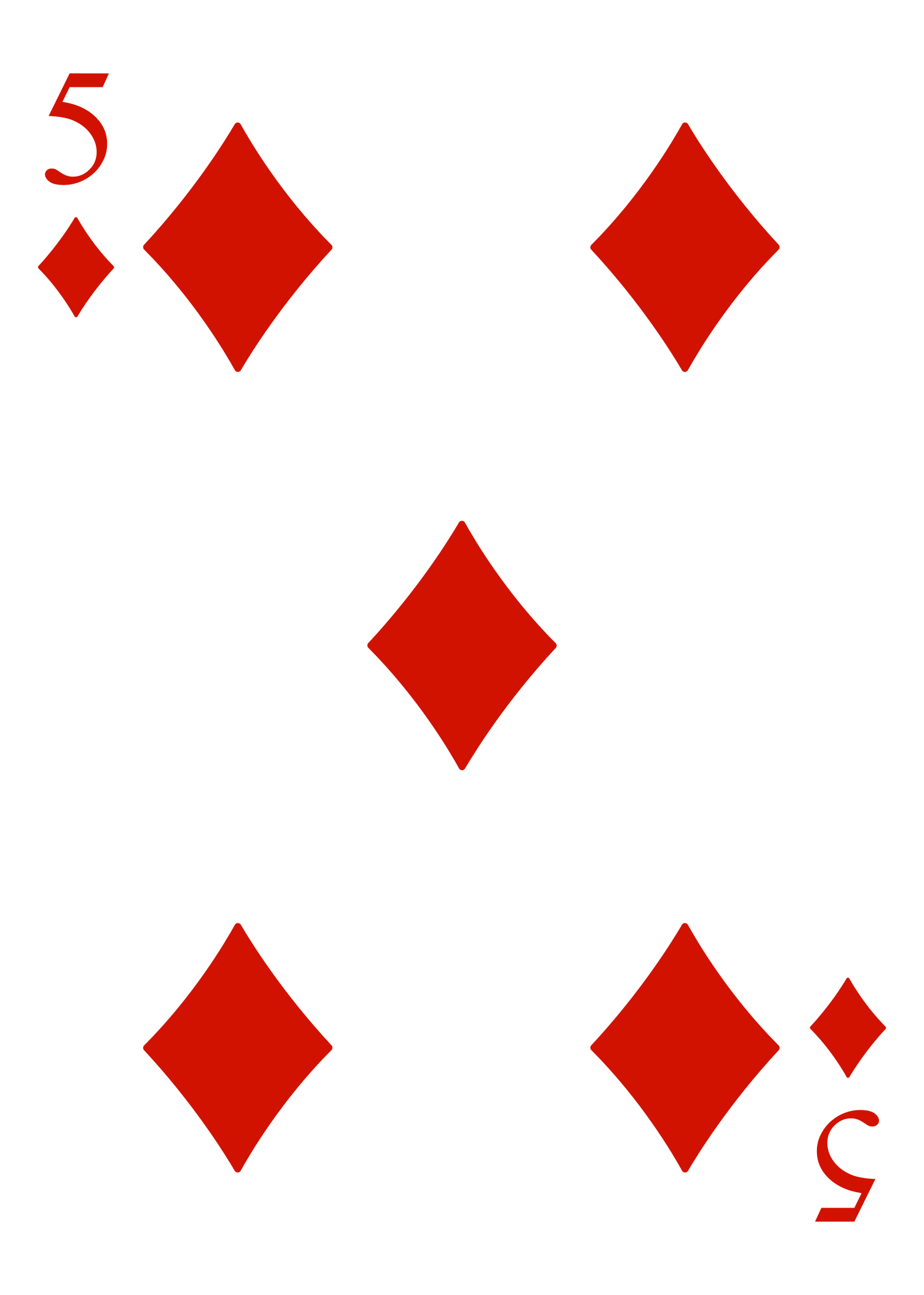
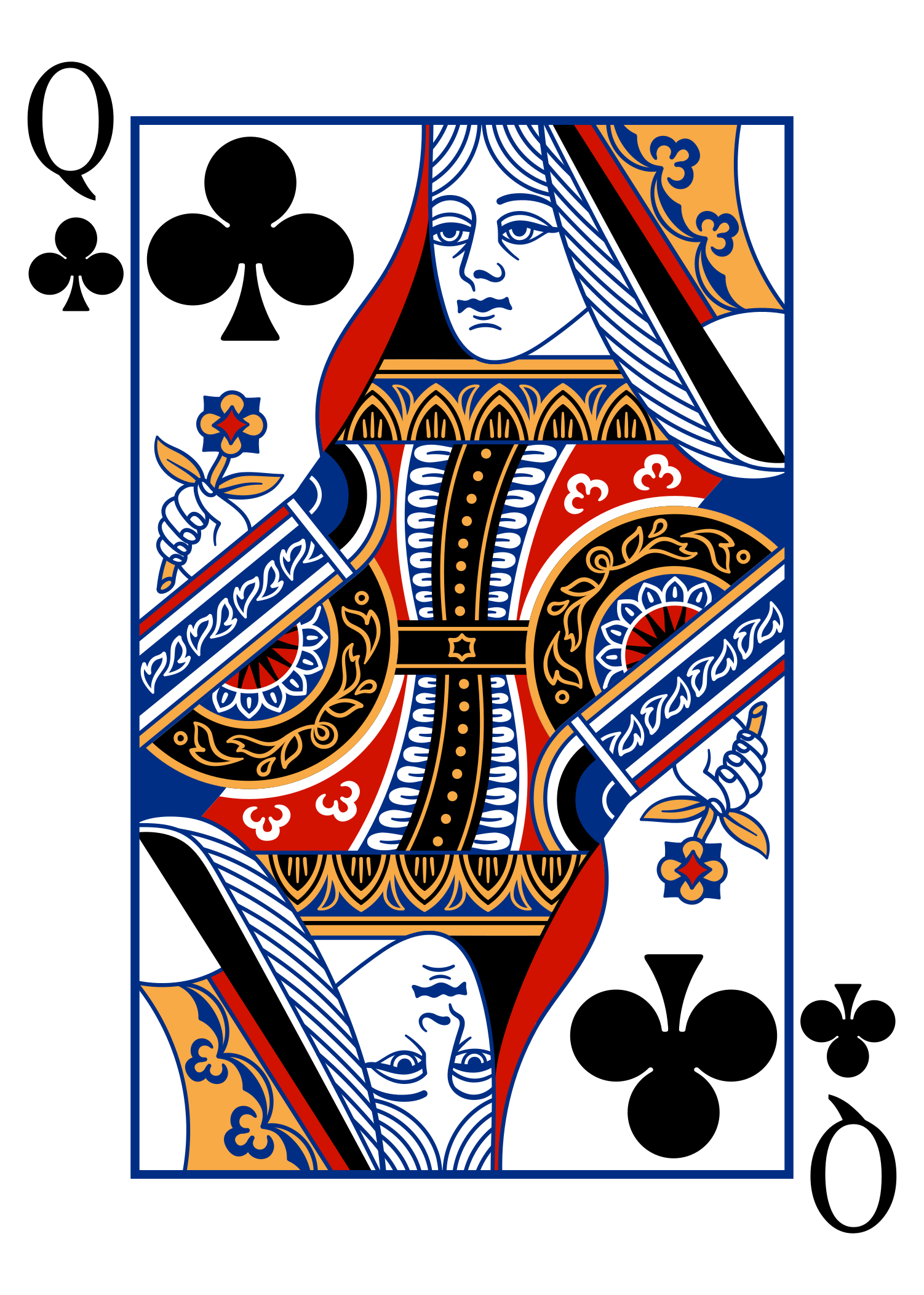
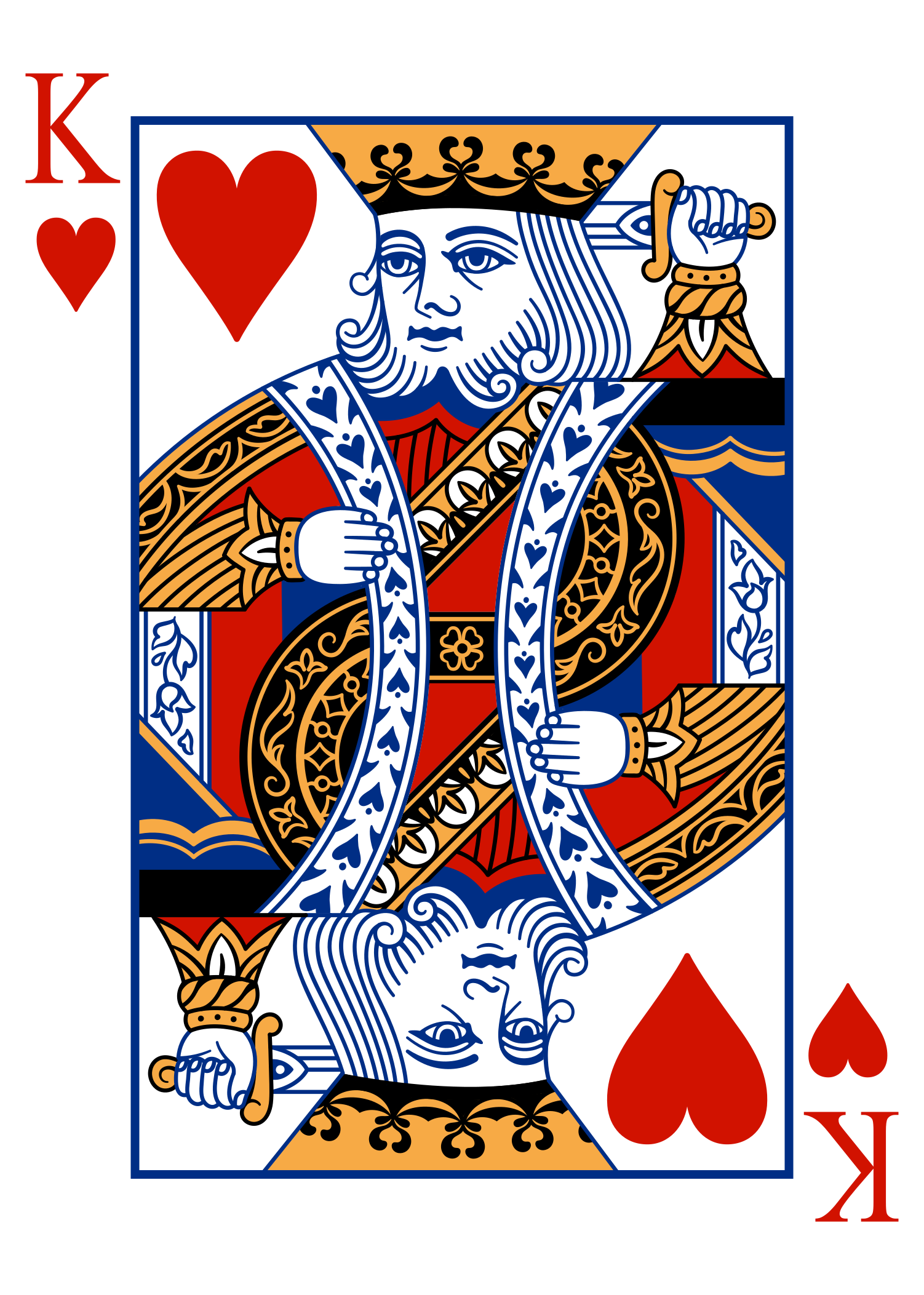
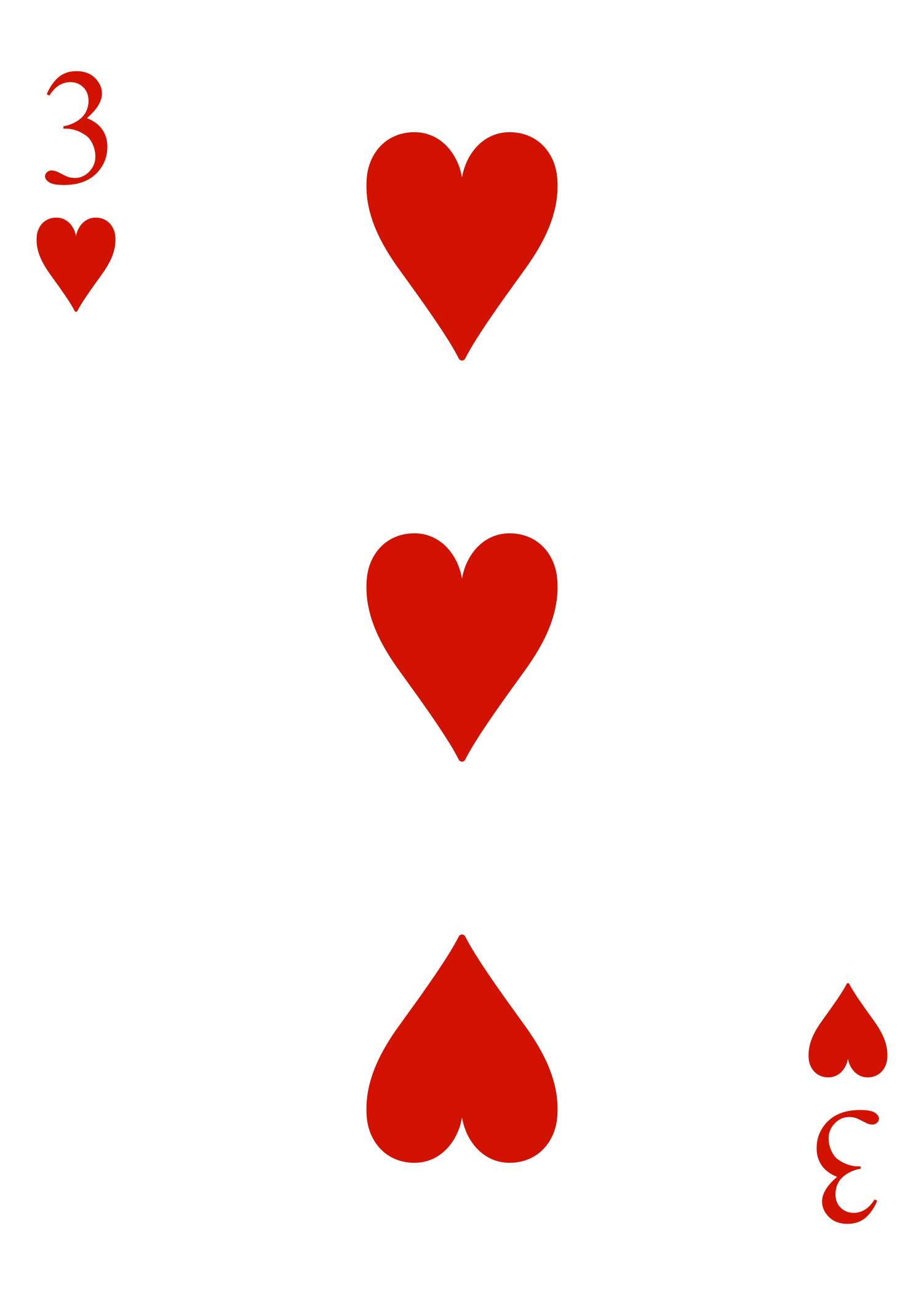
 3-card move
 By the end: you will know what each free cell does, how tableau sequences are built, and how to calculate the largest stack a position can legally move.
- All 52 cards face up
- 4 free cells
- Alternating-color builds
- Practice deal #1113
Updated July 2026
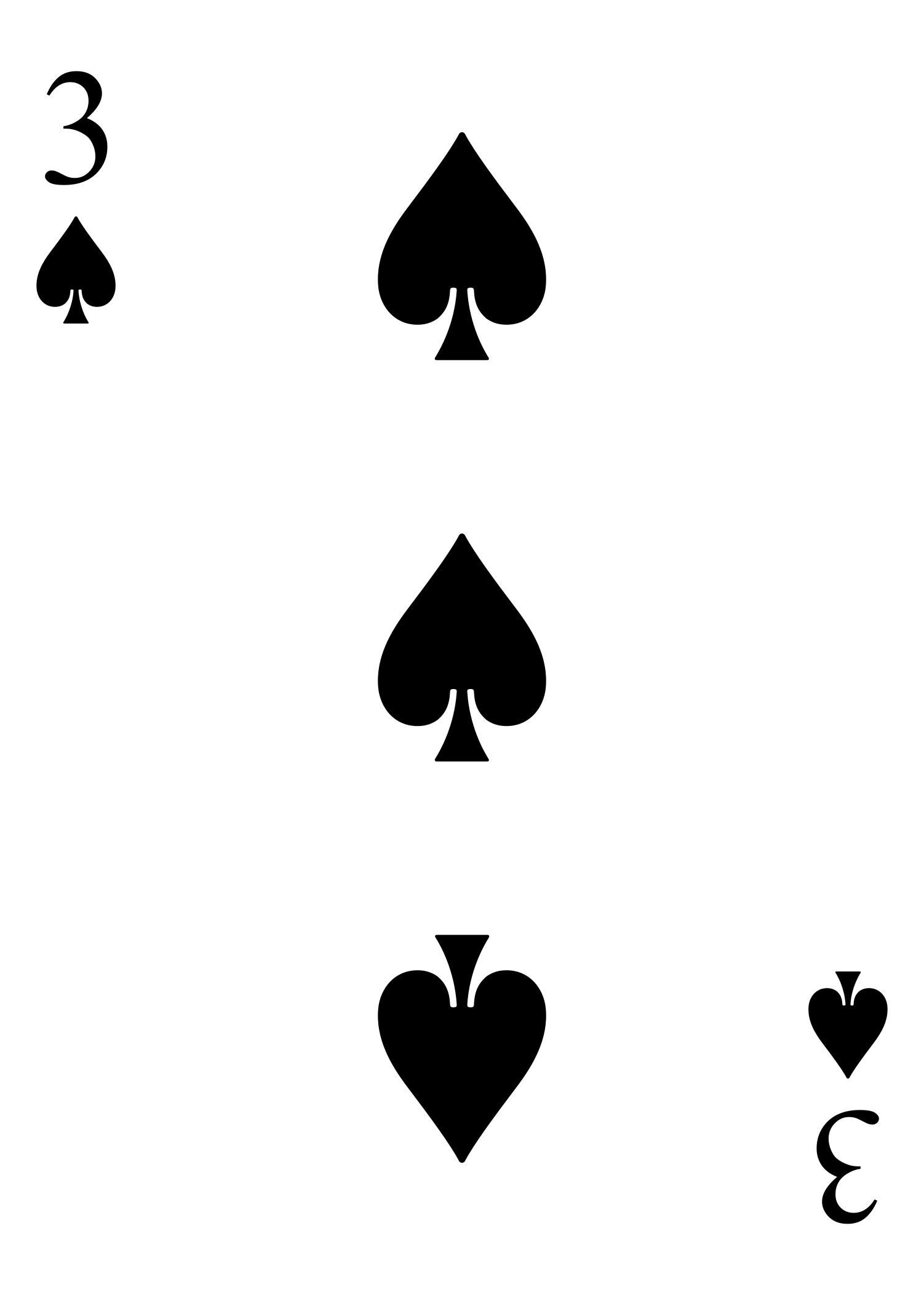
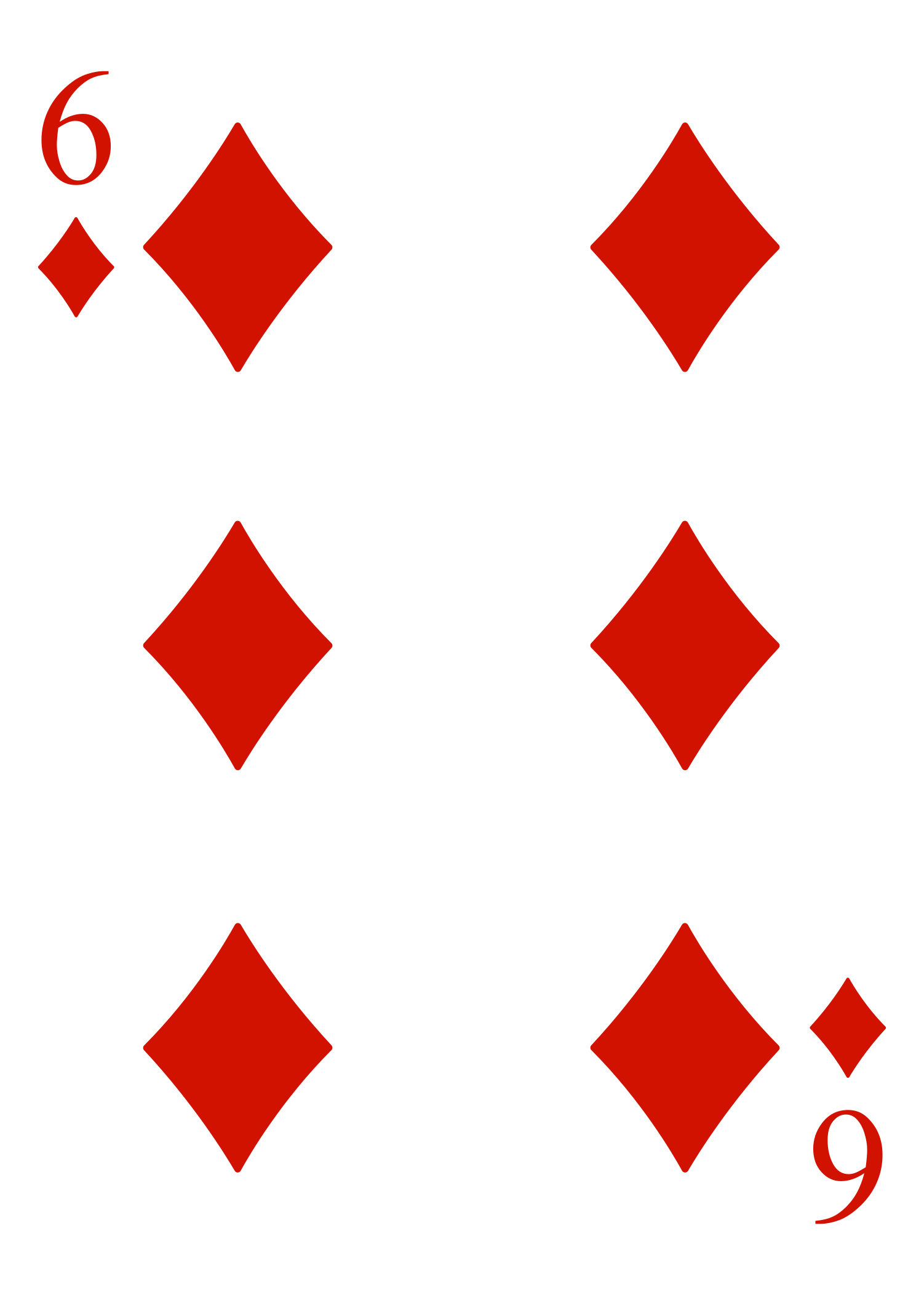


Learn FreeCell in 2 minutes: rules, free cells and supermoves
A quick video walkthrough of the FreeCell table, building in alternating colors, how supermoves are counted, and five habits of strong players. Full written rules and strategy follow below.
In this video
Languages
What makes FreeCell different
All information is visible. The challenge is arranging enough temporary workspace to move it.

Every card starts visible
The full puzzle is visible before move one.
Full explanation +
All 52 cards are dealt face up. A buried Ace is not a surprise; it is a planning constraint you can see. That makes losses easier to analyze and gives careful play a much larger role than luck.
 one card each
Four free cells replace the stock
Each cell holds one temporary card.
Full explanation +
Each free cell can temporarily hold one card. A cell is not a destination to fill casually—it is working memory. The more cells remain empty, the more cards you can reorder or carry together.
 any card
Any card may enter an empty column
Any card or legal run may use the space.
Full explanation +
Solitaire Draw 1 reserves empty tableau spaces for Kings. FreeCell allows any available card or legal sequence to enter an empty column. That freedom makes empty columns extraordinarily powerful.
Deals have stable numbers
A number reproduces one exact opening.
Full explanation +
The classic Microsoft deal numbers reproduce the same opening arrangement. Sharing a number lets two players solve the identical puzzle, compare lines, or revisit a historically difficult deal.
Ready to read an entire board before moving? Play FreeCell while keeping this guide open.
FreeCell setup
Eight face-up columns hold the whole deck. Four cells wait on the left; four suit foundations wait on the right.



- 01
Deal eight columns from left to right. The first four columns receive seven cards each; the last four receive six each.
- 02
Leave four free cells empty above the tableau. Each cell can hold one card of any rank or suit.
- 03
Leave four foundations empty, one for each suit. They build upward from Ace through King.
- 04
Keep all tableau cards face up. There is no stock and no redeal; the 52 visible cards are the whole puzzle.
FreeCell rules
Single-card rules are simple. Open a lesson when you want the complete explanation.
01 Build tableau columns down in alternating colorsDown one rank, alternating colors. Complete rule+
Place a card on a card exactly one rank higher and the opposite color: a red 6 on a black 7, for example. Suit does not have to match. A black 6 cannot go on a black 7.
02 Put one card in each free cellOne card per temporary cell. Complete rule+
Any exposed tableau card may move to an empty free cell. A cell holds only one card, and only that card can leave it. Cards in cells remain available for tableau or foundation moves.
03 Build foundations by suit from Ace to KingAce to King, separated by suit. Complete rule+
Move an Ace to its suit foundation, then add 2, 3, and so on through King. The game can automatically send obviously safe cards, but do not assume every available foundation move helps your position.
04 Use any card or legal sequence in an empty columnAny exposed card can start the column. Complete rule+
An empty tableau column accepts any exposed card. It can also accept a movable alternating-color descending sequence if the current free-space capacity is large enough.
05 Move only as many cards as the free spaces supportWorkspace sets the movable run length. Complete rule+
A dragged sequence must be correctly ordered and must fit the current supermove capacity. The interface rejects an oversized move. The next section shows exactly where that limit comes from.
How many cards can you move in FreeCell?
To a nonempty destination, FreeCell can move (F + 1) × 2E cards as one valid stack, where F is the number of empty free cells and E is the number of empty tableau columns. A supermove is shorthand for the ordinary one-card moves that produce the same result. The “+1” is the base card you move after parking the cards above it; each empty column can double the amount of temporary sorting space.
Four empty free cells, no empty columns: 5 cards
(4 + 1) × 2⁰ = 5. You can park four cards in the cells, move the fifth card to its destination, then rebuild the sequence in reverse order.
Two empty free cells, one empty column: 6 cards
(2 + 1) × 2¹ = 6. The empty column lets you stage one three-card block while the cells support another, doubling the no-column capacity of three.
No empty free cells, two empty columns: 4 cards
(0 + 1) × 2² = 4. Empty columns alone can provide the recursive staging space, even though every free cell is occupied.
Destination caveat: if the run itself is moving into an empty column, that destination cannot also serve as temporary storage. Use (F + 1) × 2E − 1 instead, where E includes the empty destination. For example, two empty cells and one empty destination column permit three cards, not six.
You do not need to calculate the formula before every drag. Remember its strategic meaning: occupying a free cell reduces capacity by one base unit, while losing an empty column can cut capacity in half.
FreeCell strategy basics
The strongest move is usually the one that preserves the most future movement.
01 Expose Aces and low cards earlyRelease the foundation bottlenecks. Open tip+
Foundations cannot advance until their Aces and 2s are available. Trace each buried low card upward and prioritize moves that release it without filling every free cell. One deeply buried Ace can bottleneck an otherwise organized board.
02 Keep at least one free cell openDo not spend the final temporary slot casually. Open tip+
A free cell is easiest to fill and hardest to recover when the parked card has no onward move. Before using the last open cell, identify exactly how that card will leave. The formula makes the cost visible: going from one empty cell to none halves a two-card base capacity to one.
03 Create an empty column deliberatelyOne column can double move capacity. Open tip+
An empty column can double your supermove capacity and accept any card. Target a short column whose cards already have legal homes. Do not scatter cards merely because a move is available; build a route that actually clears the column.
04 Do not rush every card to a foundationA useful landing card may belong below. Open tip+
A low card on the tableau may be needed as a landing place for the opposite color. Sending it up too early can strand a sequence. Foundation moves are safest when both opposite-color foundations are near the same rank or the card cannot help any remaining tableau build.
05 Build reversible sequencesKnow the run’s next destination first. Open tip+
Prefer alternating runs whose base has a visible destination and whose length stays within your capacity. A long sequence with nowhere to land is orderly but immobile. Plan where the whole run goes before adding another card to it.
Is every FreeCell game winnable?
Almost every classic deal has a solution. Solvability and real player results answer different questions.
CLASSIC CATALOG SOLVABILITY
31,999 of 32,000 (99.997%) A solver can find a winning line.MEASURED PLAYER RESULT
11.1% 137 wins / 1,234 startsWhy the figures are different −
The registry’s classic-catalog result is 31,999 of 32,000 (99.997%). That is a solvability count: a winning line exists for that many openings under the rules.
Players on this site won 11.1% (137 wins from 1,234 starts) during June 1–30, 2026. Starts include abandoned and exploratory games, so this is a real-use outcome rather than a measure of optimal play.
The gap between near-universal solvability and a much lower measured player rate is the game’s appeal. Most losses are analyzable. Restart the same number, preserve more workspace, and test a different order rather than blaming an unseen card.
See the methodology and current sample beside the measured FreeCell win rates.
Practice: a guided first deal
Deal #1113 opens with the exact three-card move this lesson has prepared you to make.
FIXED LESSON · DEAL #1113
Move a three-card sequence
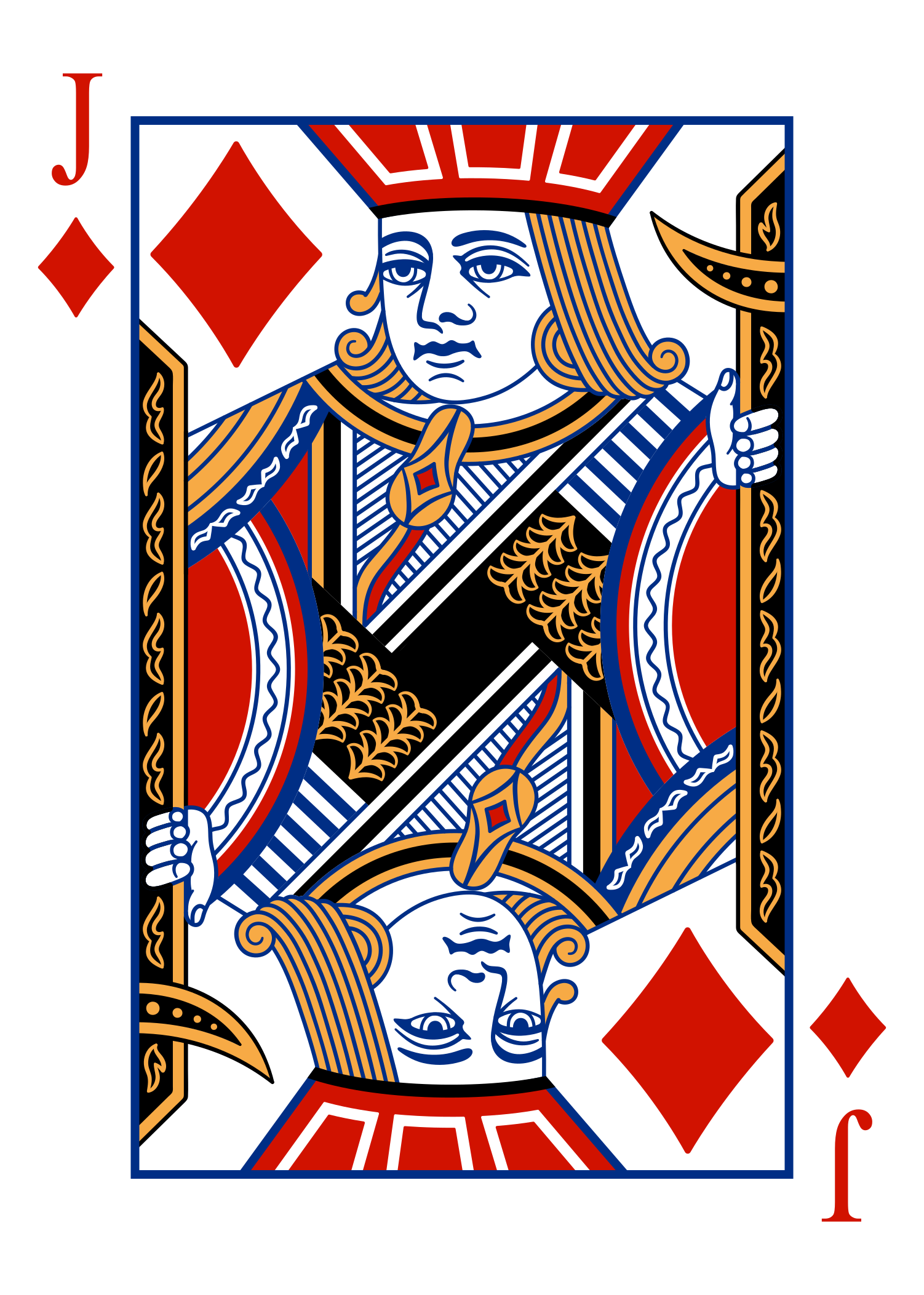
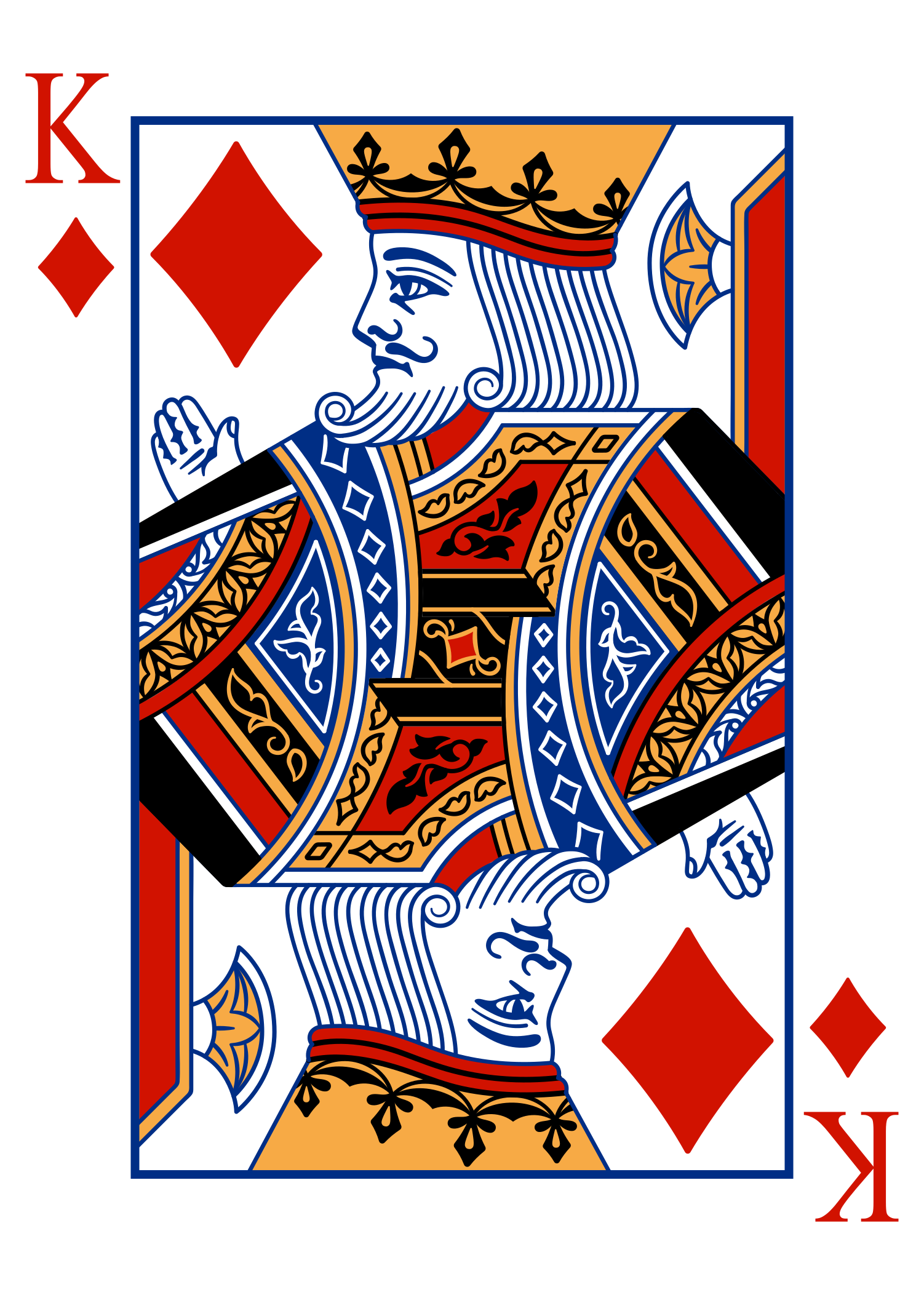
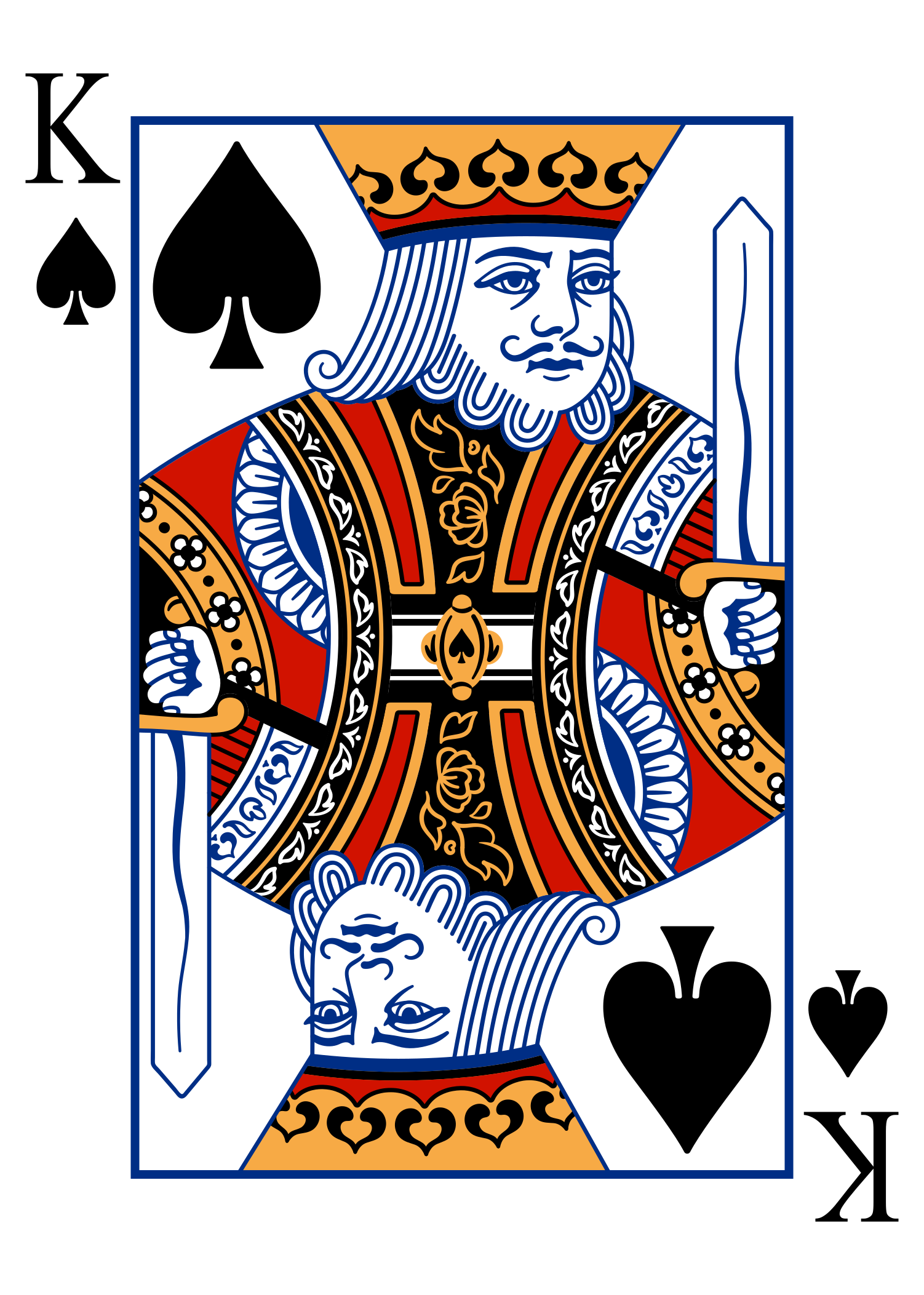
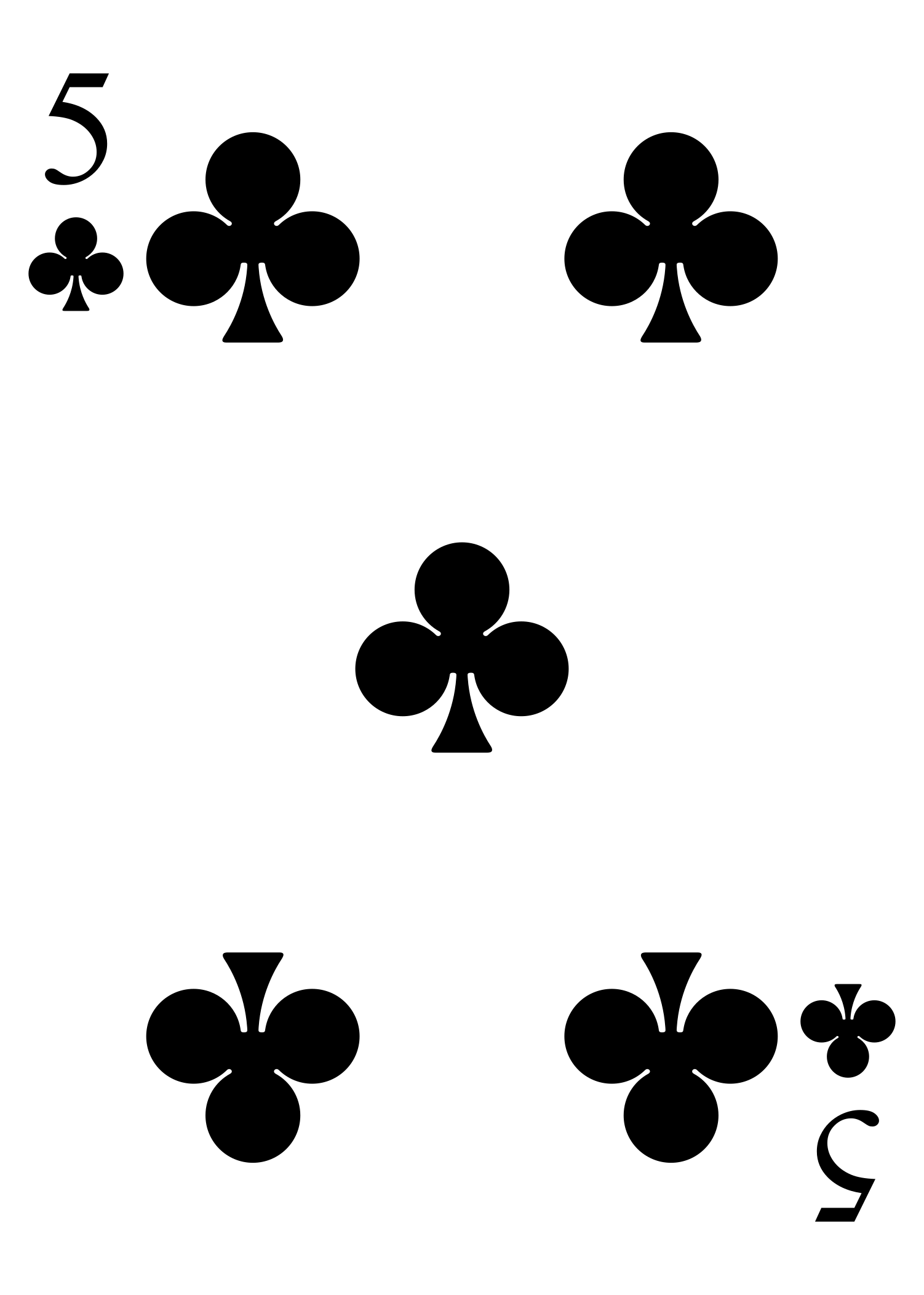
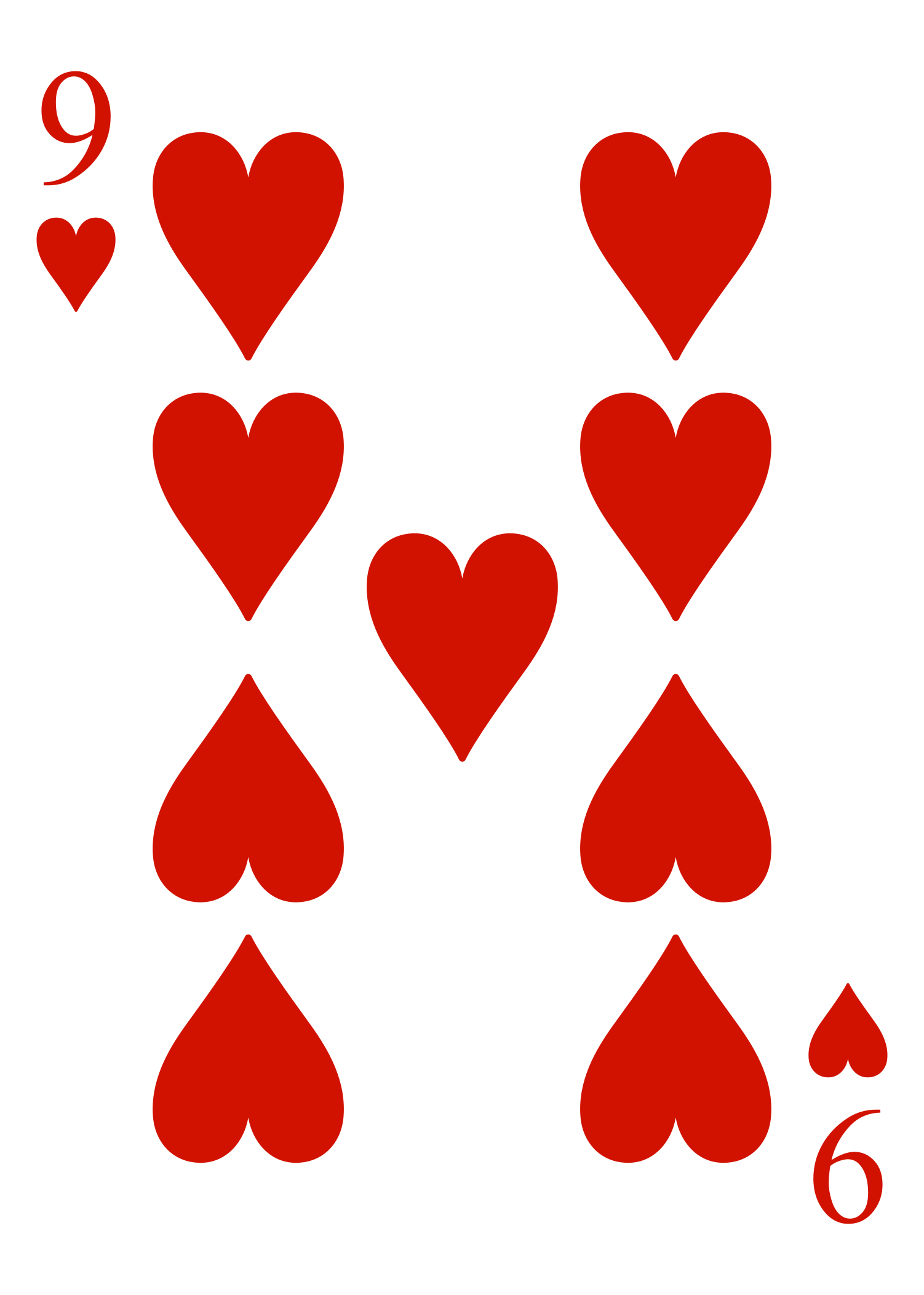
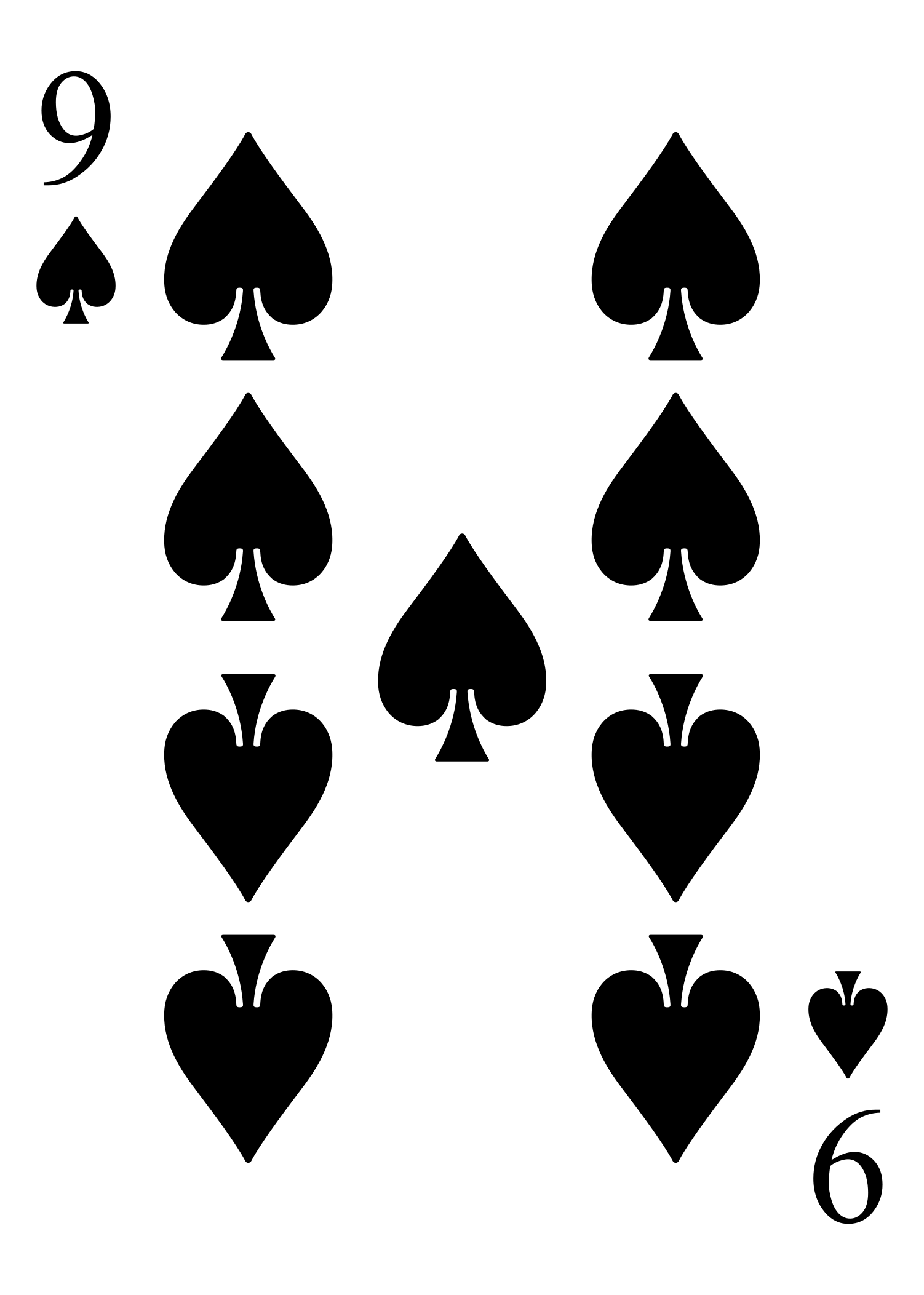
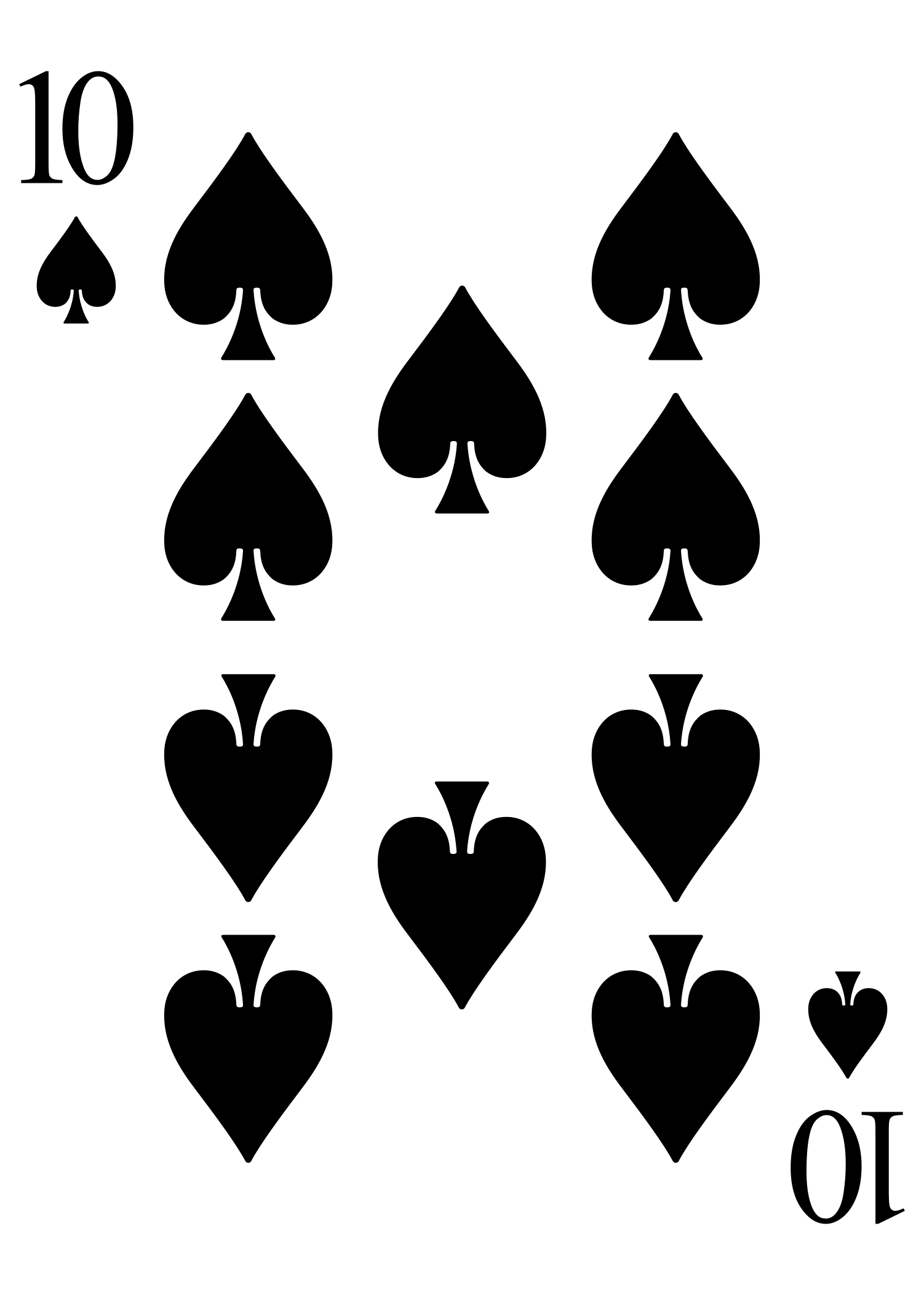
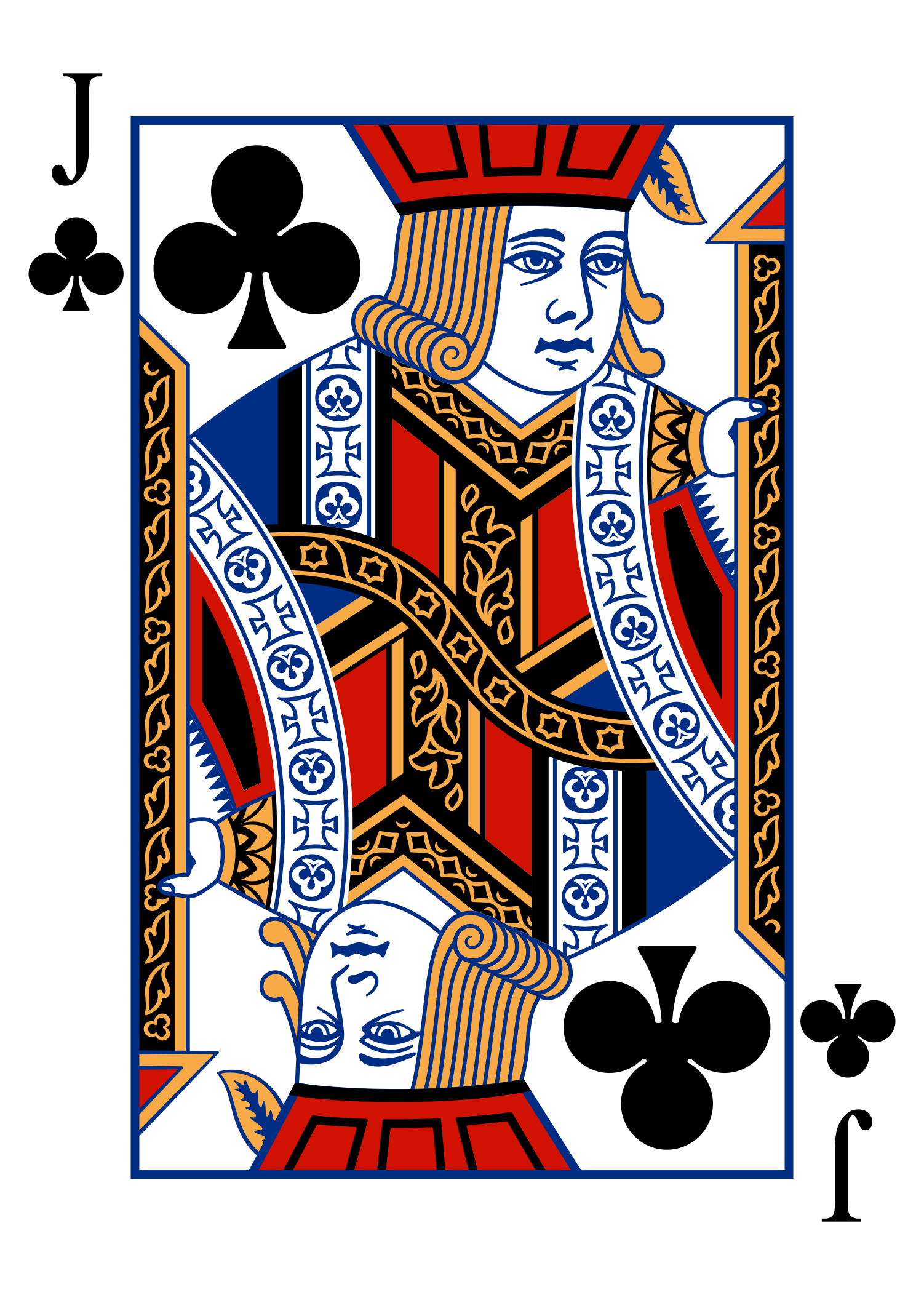
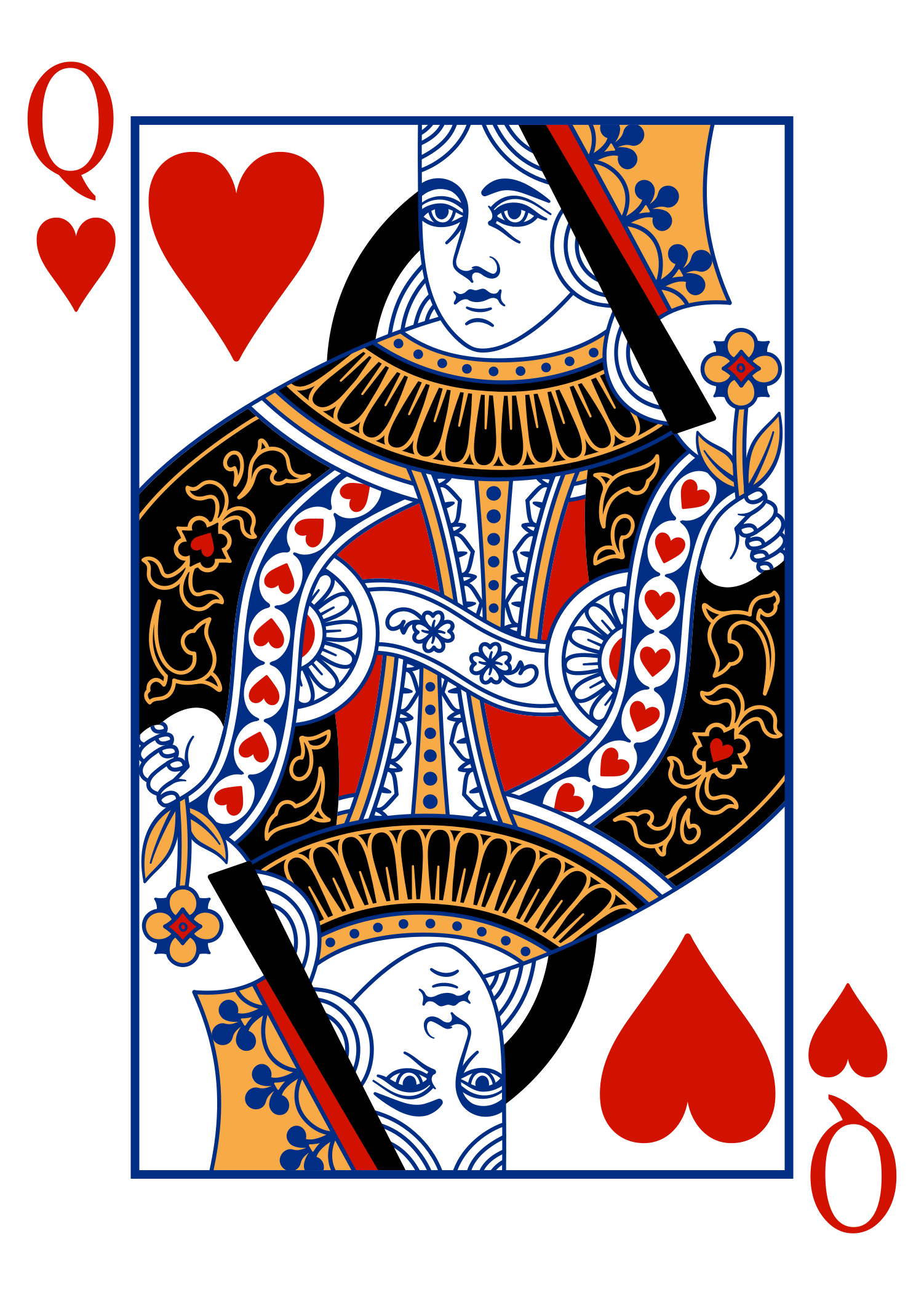
Find Q♦–J♠–10♥ in the sixth column and move the three-card run onto K♠ in the seventh. Four empty free cells make the capacity five, so the three-card move is legal. Hint can identify a move; Restart returns to deal #1113.


After the move, note that no card had to remain in a free cell—the interface performed the legal parking-and-restacking sequence for you. The capacity is still a property of the position, even when the animation feels like one move.
FreeCell FAQ
How many free cells are there?
Four. Each free cell can hold one card. Keeping cells empty increases the number of cards you can move as a sequence.
Can you move stacks in FreeCell?
Yes. A correctly ordered descending, alternating-color stack can move together when it fits the current supermove capacity. To a nonempty destination, that limit is (empty free cells + 1) × 2 to the power of empty columns; if the destination is empty, exclude it from the doubling factor.
Why can’t I make this FreeCell move?
The stack may not descend in alternating colors, the destination may not be one rank higher in the opposite color, or the stack may exceed the current supermove capacity. An empty destination accepts any exposed card, but it cannot also count as a helper column for the move it receives.
Is every FreeCell game winnable?
No, but almost all classic deals are. The registry’s classic-catalog result is 31,999 of 32,000 (99.997%); deal #11982 is the well-known exception.
What is FreeCell deal #11982?
It is the only widely accepted unsolvable deal in the original Microsoft catalog. The deal number reproduces the same opening arrangement whenever it is entered.
How do FreeCell deal numbers work?
A deterministic shuffle maps a number to one specific layout. PlaySolitaire supports Microsoft-compatible deal numbers from 1 through 1,000,000, so a shared number opens the same puzzle.