The card table, translated
Solitaire Terms — A Visual Glossary
Learn the words once, then read any solitaire rulebook with confidence. Every term is shown on the table, in plain English, with a real game you can open.
 Stock
Stock Waste
Waste
 Tableau
 Foundation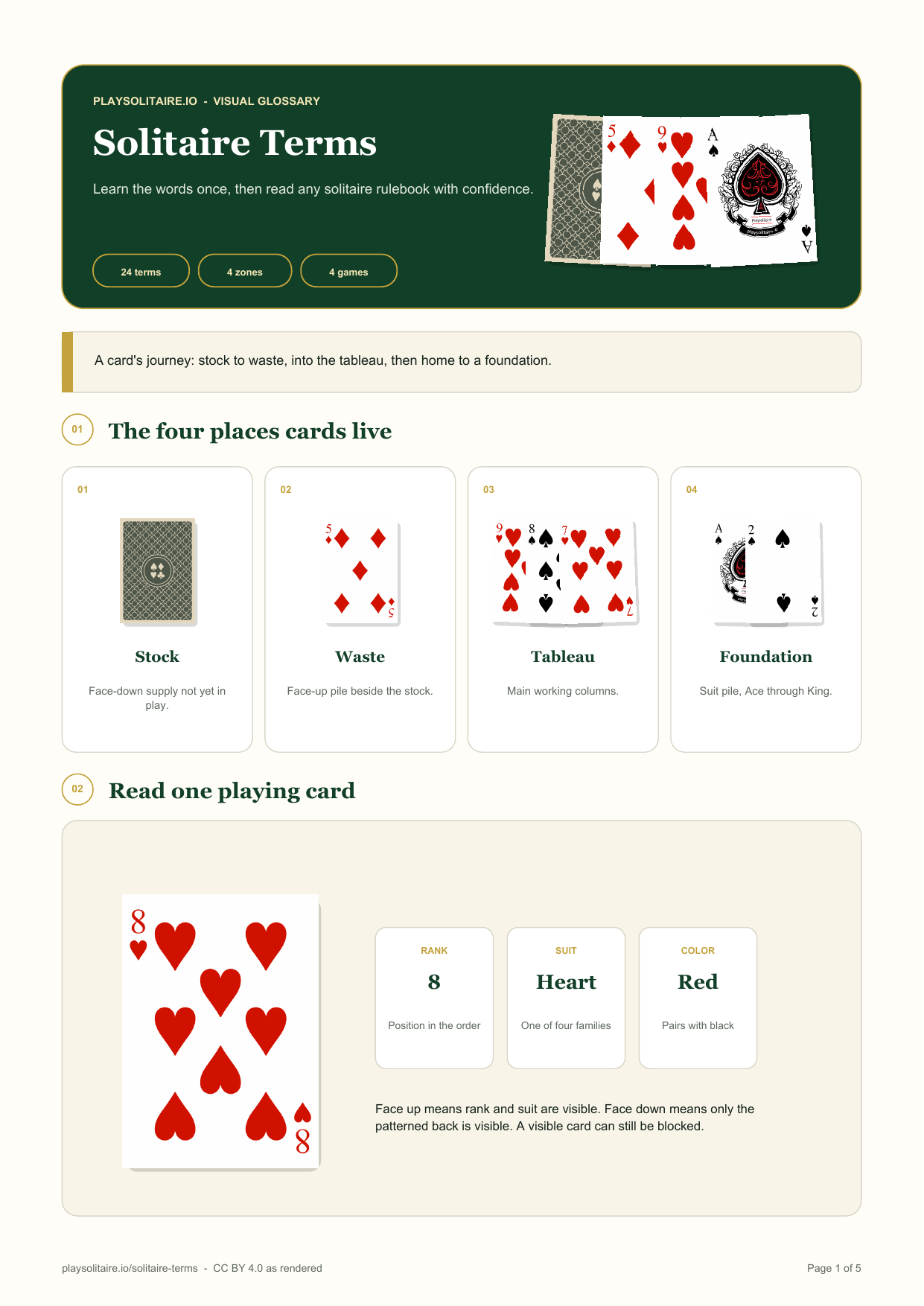
Reusable visual resource
Solitaire Terms — Visual Glossary
Preview page 1 of the five-page large-print reference. Download the PNG for a single-page visual or the PDF for all 24 definitions.
Solitaire Terms — Visual Glossary — PlaySolitaire.io (https://playsolitaire.io/solitaire-terms#solitaire-terms-visual-resource), CC BY 4.0
What are the tableau, stock, waste and foundations in Solitaire?
The tableau is the main area where cards are arranged and moved. The stock pile holds cards waiting to be drawn, the waste holds drawn cards with only its top card playable, and foundations are the destination piles normally completed to win.
Board zone
Stock
The stock pile is the face-down supply of cards not yet in play. Draw from its top when the board has no better move.Board zone
Waste
Also called: discard pile The face-up pile beside the stock. Only the card currently on top is available to play.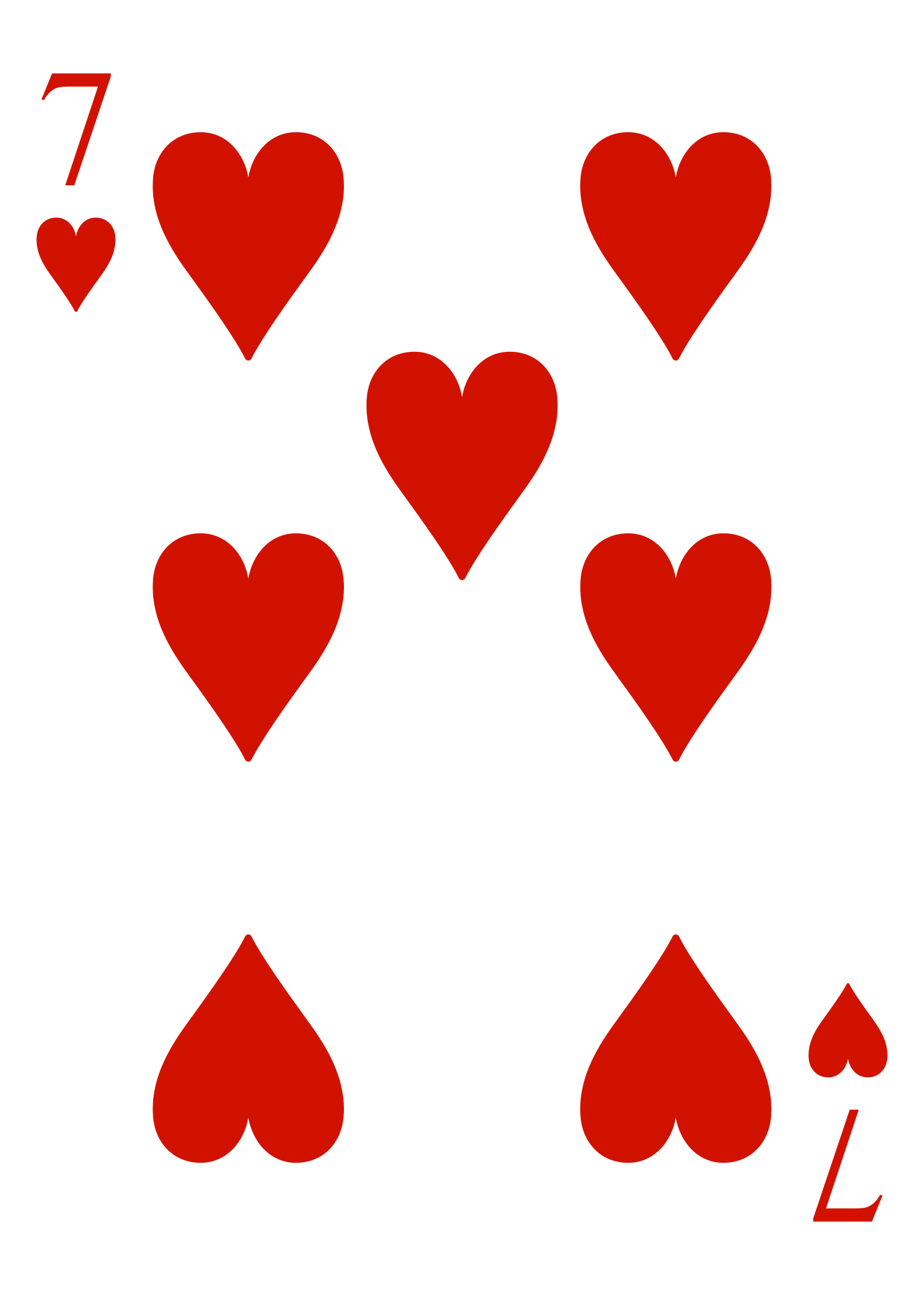
Board zone
Tableau
The tableau is the main working area: seven columns in Solitaire Draw 1, ten in Spider, and eight in FreeCell. See the tableau in a live game ›
Board zone
Foundation
Also called: home pile A foundation is a destination pile, usually built upward by suit from Ace to King. Completing every foundation normally wins.The words that describe a move
These eight verbs explain nearly everything cards do between the deal and the win.
 →
→ Build
Place cards in the order required by the game: down on a tableau, up on a foundation, or in suit in Spider.
Run
sequenceTwo or more cards already arranged in legal order. Some games let the whole run move as one unit.
Draw
Turn the next card, or packet of cards, from the stock to make a new card available.
Deal
Distribute cards into the opening layout. In Spider, “deal” can also mean adding a fresh row later.
 ↻
↻ Flip
turn upTurn a face-down card face up after the cards blocking it have moved away.
 ✦
✦ Reveal
exposeMake a hidden or blocked card available. A move can reveal a card even when no physical flip occurs.
Recycle
redeal the stockTurn an exhausted waste pile back into a face-down stock while preserving its order.
Undo
Reverse the last move. It is useful for comparing two plans, not only for correcting a slip.
Space and position words
Solitaire strategy is often the art of creating one safe place for the next card.
Column
One vertical pile in the tableau. Its top playable card is the lowest visible card on screen.
Empty column
spaceA cleared tableau position. Which card may enter depends on the game: often a King, sometimes any card.
Cell
free cellA temporary one-card holding place in FreeCell-family games. An empty cell increases moving capacity.
Reserve
A separate group of cards held outside the tableau. Canfield exposes one reserve card at a time.
Available card
exposed cardA card with no card covering it and no rule preventing its use. “Visible” does not always mean available.
Buried card
blocked cardA card trapped beneath or behind other cards. Reaching it requires moving its blockers first.
Cells are central to FreeCell; the reserve is central to Canfield Solitaire. The same idea—temporary space—gets a different shape.
How rules describe the cards themselves
Rank, suit, color, and direction tell you whether one card may legally follow another.
Rank
The card value: Ace, 2 through 10, Jack, Queen, or King. Rank determines what comes next.
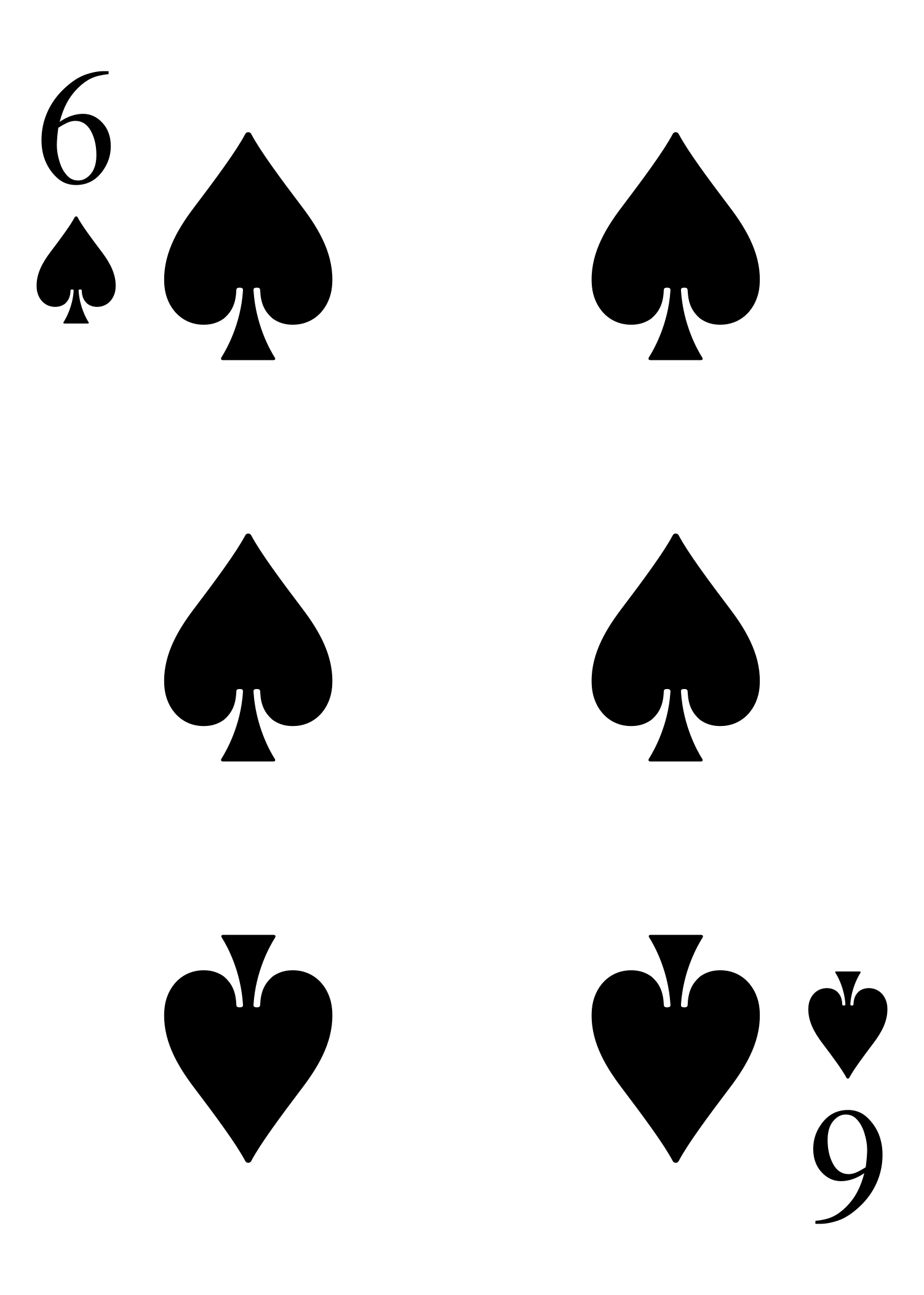
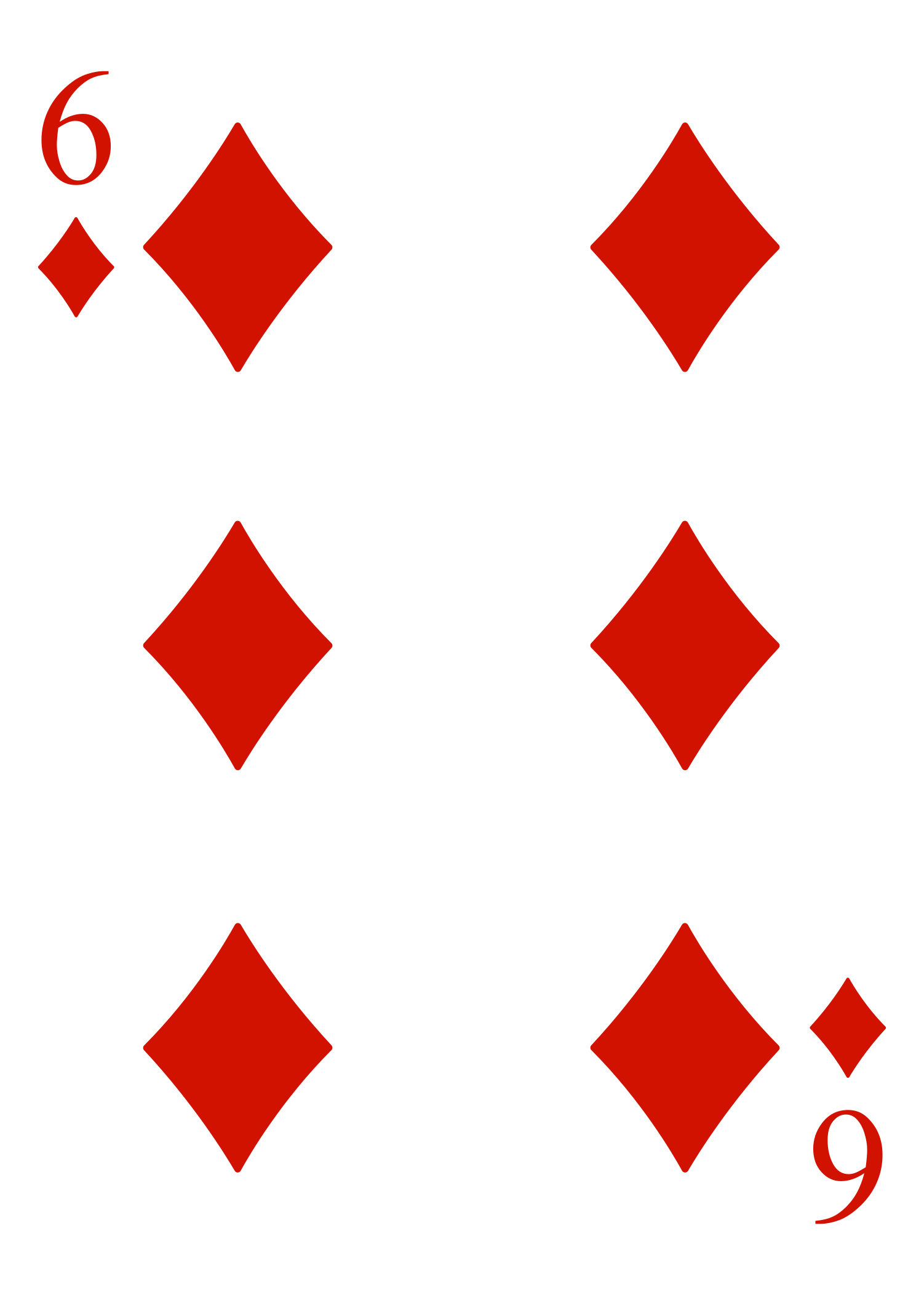
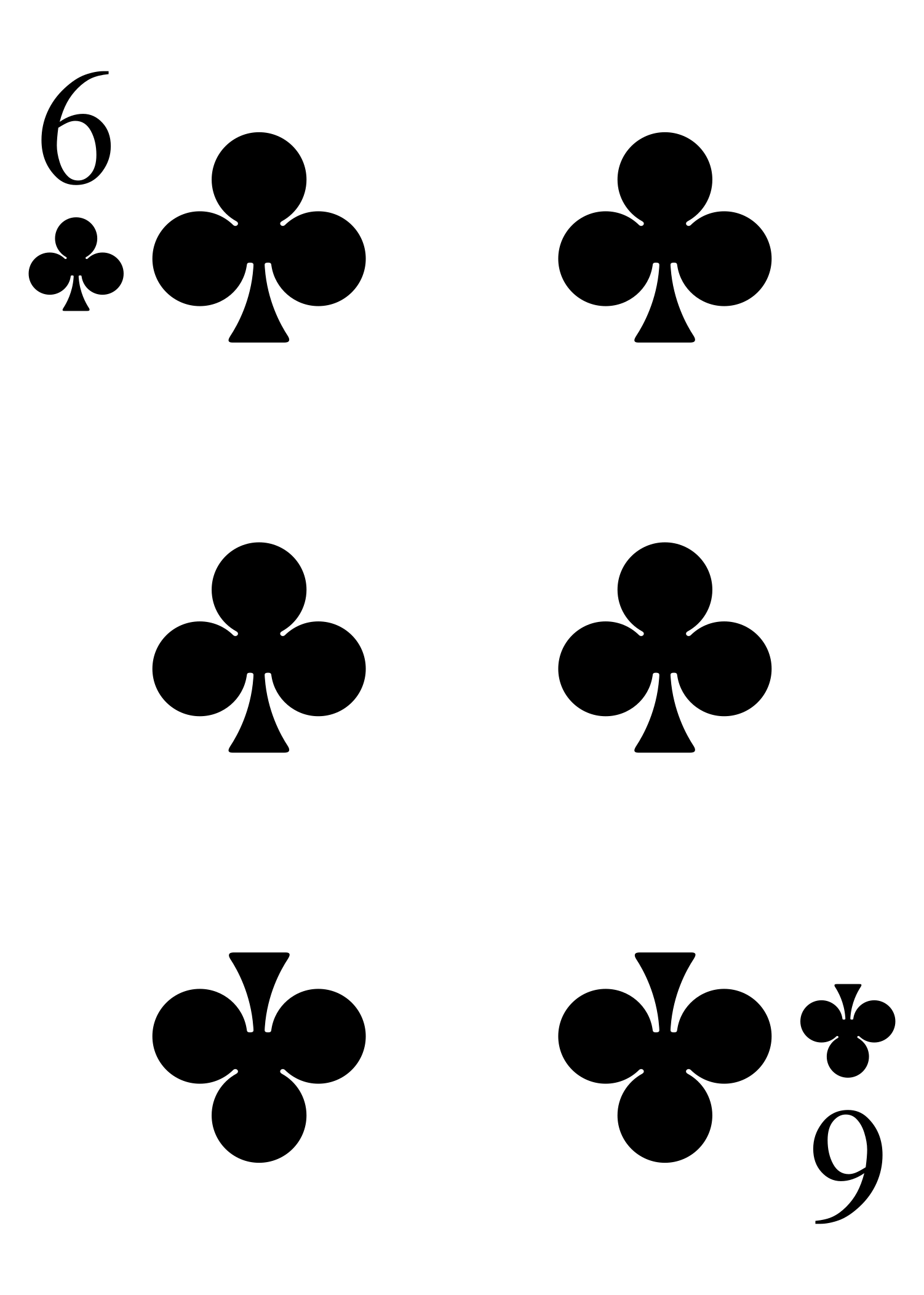
Suit
Spades, hearts, diamonds, or clubs. A same-suit build keeps every card under one symbol.
Color
Red for hearts and diamonds; black for spades and clubs. Classic tableau runs alternate colors.
Face up
The rank and suit are visible. A face-up card may still be blocked by another card above it.
Face down
Only the patterned back is visible. Its identity remains unknown until the game turns it over.
Ascending / descending
Ascending means rank goes up, such as Ace to King. Descending means rank goes down, such as King to Ace.
The same word can change between games
The board vocabulary stays familiar, but each solitaire family gives the words a different job.
7-column classic
Solitaire Draw 1
Build the tableau down in alternating colors, draw through a stock and waste, then finish four foundations.
10-column suit builder
Spider Solitaire
There is a stock but no waste. A deal adds one card to every column; a clean King-to-Ace run leaves the table.
Open-information planner
FreeCell
Every card begins face up. Cells and empty columns create the temporary space used to move longer runs.
Pair-clearing game
Pyramid Solitaire
There are no foundations. Exposed cards leave in pairs totaling 13, and the goal is to clear the pyramid.
Read one rule without the jargon
A familiar rule sentence becomes simple when it is split into three instructions.
- 1Build
Place one card onto another.
- 2Down
The next rank is one lower.
- 3Alternating colors
Red follows black, or black follows red.
Need the complete game rather than the vocabulary? Continue with the full how-to-play walkthrough.
Solitaire terms FAQ
01What is the tableau in Solitaire?
The tableau is the main working area where cards are arranged and moved. Solitaire Draw 1 has seven tableau columns, Spider has ten, and FreeCell has eight.
02What is the stock pile in Solitaire?
The stock pile is the face-down supply waiting to be drawn. Drawn cards land face up on the waste, and only the top waste card is normally available to play.
03What does foundation mean in Solitaire?
A foundation is a destination pile, usually built upward by suit from Ace to King. Filling every foundation normally completes the game, although clearing games such as Pyramid have none.
04How many cards are used in solitaire?
Most solitaire games use one standard 52-card deck without Jokers. Spider, Forty Thieves, and Crescent use two decks, or 104 cards.
05What is a run or sequence?
A run is a group of cards already arranged in legal order. Depending on the game, the whole run may move together, only same-suit portions may move, or only one card may move at a time.
06What does redeal mean in solitaire?
Redeal often means recycling the exhausted waste into a fresh stock for another pass. In Spider, dealing means adding a new row across the tableau instead, so the surrounding rule matters.