A decision guide for Klondike
Solitaire Strategy: Win More Games
Win more by revealing hidden cards before spending space or drawing from the stock. Practise that choice on the real positions below. If moves still feel unfamiliar, use the solitaire rules refresher first.

Languages
What a realistic win rate looks like
You cannot win every deal. Better decisions help you finish more of the deals that were winnable.
Why these numbers differ
A useful strategy guide begins by removing an impossible expectation: careful play cannot rescue every shuffled deal. Some losses come from the cards; many more come from committing too early, hiding a needed color, or spending the stock before the tableau is ready. The practical target is not perfection. It is converting a larger share of the deals that offered a winning path.
Our what a realistic win rate looks like reference keeps two figures separate. A solvability estimate asks whether a winning line exists in principle. A measured player rate asks how often people actually finish, with hidden information, ordinary mistakes, abandoned games, and unlimited undo included. Strategy operates in the distance between those two figures.
Treat a personal win rate as a trend, not a verdict on one session. Ten deals can be unusually kind or unusually hostile. Over a longer run, improvement appears first in quieter signals: more face-down cards exposed before the stock runs thin, fewer empty columns wasted, and fewer restarts caused by a foundation card that was promoted too soon.
Opening moves: what to do before touching the stock
Before drawing from the stock, scan the tableau in this order.
- 1 Reveal Turn over a hidden card
- 2 Aces Send safe low cards up
- 3 Transfer Create another move
- 4 King Use space with a plan
- 5 Draw Stock comes last
 →
→

Scan the tableau first. The stock is step five, not step one.
Why this order works
The opening tableau contains twenty-one hidden cards and only seven face-up cards. That imbalance tells you what matters: information. In a free Solitaire game, inspect every face-up card against every possible destination before drawing. If the vocabulary is unfamiliar, review the terms used here before planning the opening. Look especially for a move that uncovers a face-down card, because the newly revealed card changes the decision tree while a cosmetic rearrangement merely changes its appearance.
Next, check for Aces and 2s that can move safely to their foundations. An Ace has no lower tableau job, and a 2 rarely carries useful weight once its Ace is available. Higher cards deserve more patience. A red 4, for example, may be the only landing place for a black 3 that must move before a hidden card can turn over.
Scan the longest covered columns first. Revealing a card from a six-card column usually creates more future value than tidying the one-card column beside it. If two moves expose a card, prefer the move that also preserves both colors, avoids occupying an empty column, or creates a useful descending run. The opening is a search for options, not points.
Only then should the stock enter the game. A stock draw is not automatically bad; drawing without completing the tableau scan is. Make the scan a ritual: reveal moves, safe foundation starts, useful transfers, King access, then stock. Repeating that order prevents the most common avoidable loss before it starts.
How to win solitaire: the core priority order
When several moves are legal, start at 1 and stop at the first move that improves the board.
-
1 InformationReveal a face-down tableau card
Choose a move that turns hidden information into visible information whenever the resulting card can be used or safely parked. Every reveal enlarges the set of moves you can evaluate, while an unseen card can support no plan. Favor the most deeply covered column when two reveals are otherwise equal.
A reveal is not free if it forces a valuable King space to be filled badly or breaks the only useful sequence. Compare the position after the flip, not just the satisfaction of flipping. Still, among ordinary opening choices, uncovering a card is the strongest default because it gives every later decision more evidence.
-
2 Safe foundationsMove an Ace or an immediately useful 2
Send an available Ace to its foundation, then move a 2 when doing so releases a card or opens a transfer. These low ranks cannot hold long tableau sequences, so keeping them below rarely creates leverage. Pause on higher ranks until both opposite colors have enough support to keep building.
The important distinction is between starting a foundation and racing it. Aces clear space. A 9 promoted too early can remove the black or red landing card that a buried 8 still needs. Low cards are usually safe; medium and high cards must earn their promotion by freeing something concrete.
-
3 Compound moveUse a tableau move that creates another move
Prefer transfers with a visible second benefit: exposing a card, joining a longer alternating run, freeing the source column, or making a stock card playable. A legal move that leads nowhere can consume the exact color or rank needed later. Ask what becomes possible immediately after the card lands.
This is the simplest form of looking ahead. You do not need to calculate the whole deal. Compare two positions one move later. If one transfer gives you another purposeful action and the other merely changes the top cards, the first has converted one option into two.
-
4 King spaceCreate an empty column only for a prepared King
Empty space is scarce and powerful because only a King-led sequence can occupy it. Before clearing a column, identify the King or King-run that will move there and what that move will uncover. An empty column without a prepared tenant is not progress; it is an option you cannot use.
If two Kings are available, compare their colors to the blocked cards. A black King is valuable when several red Queens need room; a red King supports black Queens. Also compare the length of each King-run: moving a longer run may uncover more cards, but it can tie up the column for longer.
-
5 Stock orderPreserve access through the stock
Draw only after the tableau scan, and notice which waste cards become reachable in which order. Playing one stock card changes what appears next; recycling without a plan repeats the same obstruction. Use a reachable card when it unlocks the tableau, not simply because it can move to a foundation.
In Draw 1, access is forgiving but order still matters. In Draw 3, every play changes the packet alignment on the next pass. A useful buried card may become reachable only after you remove one earlier card, so stock management is a sequence problem rather than a tapping rhythm.
-
6 Branch testUse undo to compare branches
When two plausible moves reveal different futures, try the less obvious branch, inspect the result, and undo if it closes the board. Undo is most valuable as a comparison tool, not as a reflex after every inconvenience. The lesson is the difference between the branches, not the clean move counter.
A branch test can answer a precise question: Which King exposes a usable card? Does promoting this 5 strand the opposite-color 4? Can one stock play change the next cycle? That evidence transfers to future deals. Repeating random moves and undoing them does not. Use a short replay decision log to compare one changed choice.
How to use the priority order
When several moves are legal, work down this list and take the highest priority that materially improves the position. A later item can win when it enables an earlier one, but it should have a reason beyond making the board look neater.
How Draw 3 strategy differs
In Draw 3, playing one stock card changes which card reaches the top on the next pass.

How to plan the next pass
The tableau priorities do not change in draw-3 Solitaire; stock access does. You see cards in packets of three and may play only the top card. Removing one accessible card shifts the grouping on the next pass, which can expose cards that were previously trapped in the middle or bottom of a packet.
On the first pass, notice cards rather than forcing every legal play. Identify an Ace, a needed opposite-color parent, or a King that could use an empty column. On the next pass, remove cards that change the packet alignment in favor of those targets. A harmless foundation play can be valuable chiefly because it changes which card will sit on top three draws later.
Avoid clearing the waste automatically. Sometimes the top card protects the order you need for the next cycle. Likewise, a tableau move that accepts a waste card may be strategically stronger than sending that card straight to a foundation, because the tableau placement changes access without removing a useful building rank from play.
Measured Draw 1 and Draw 3 results on this site sit closer than theory would suggest. That does not make Draw 3 easier. Player self-selection is one possible explanation, but the aggregate results do not establish the cause. Our Draw 1 versus Draw 3 analysis shows how a comparison can reverse when groups differ.
| Mode | Won here | How to read it |
|---|---|---|
| Draw 1 | 31% | Friendlier access; published rounded result |
| Draw 3 | 33% | self-selection: experienced players choose Draw 3 |
When not to move a card
Wait when a move would remove a needed bridge, waste an empty column, or reveal nothing.
WaitFoundation bridge +
Foundation greed is the classic example. Suppose a black 6 can move up, but a red 5 remains buried and the only other black 6 is inaccessible. Promoting the visible 6 removes a future bridge. Unless the move reveals a card or releases an essential stock card, leave it in the tableau until the red 5 no longer needs it.
WaitEmpty column +
King placement deserves the same restraint. An empty column feels unfinished, so players rush to fill it. Instead, compare every reachable King, the Queens each can support, and the card each move exposes. If no King advances the board, keep the space open. Its value is the choice it preserves.
WaitCosmetic tidy +
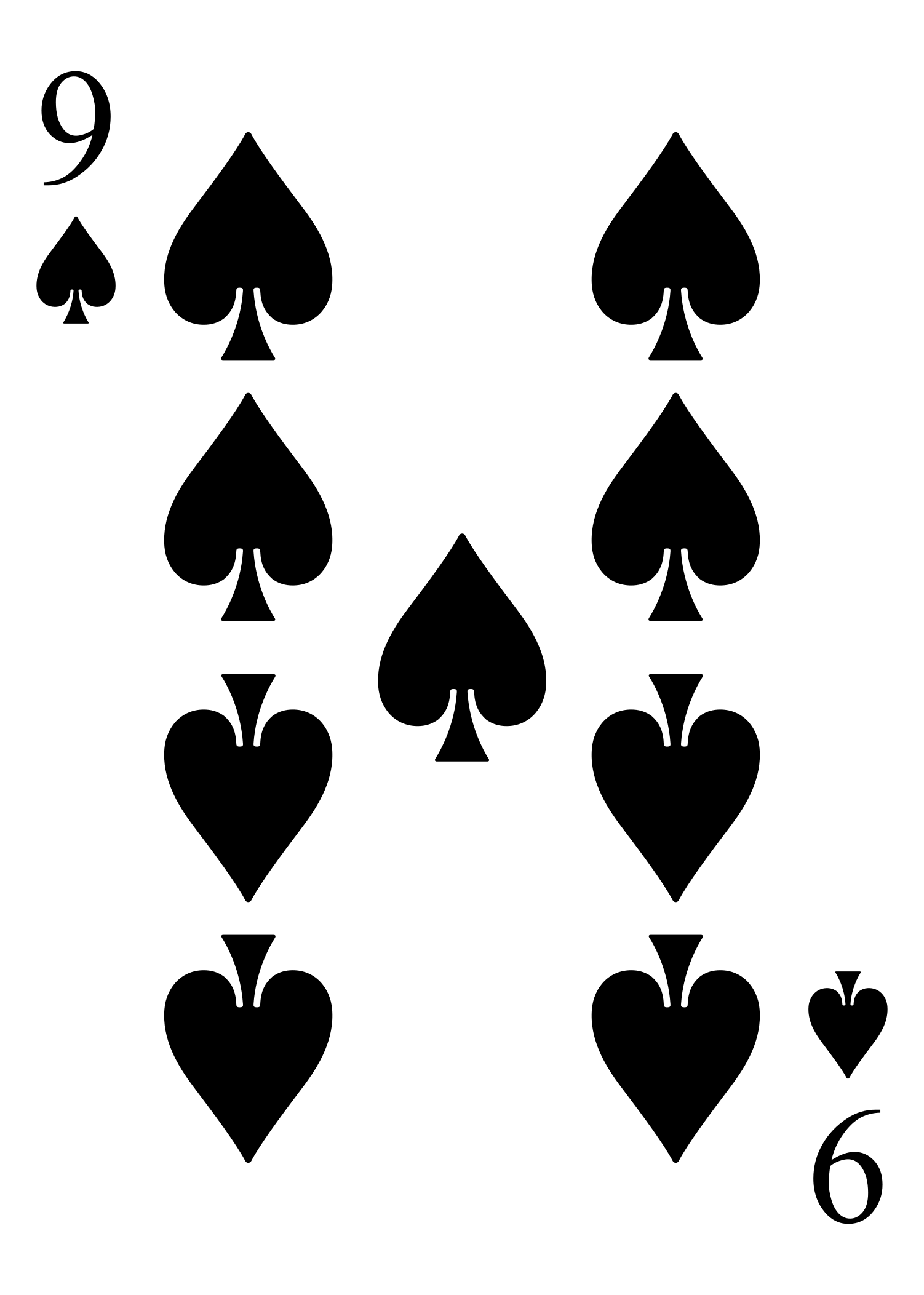
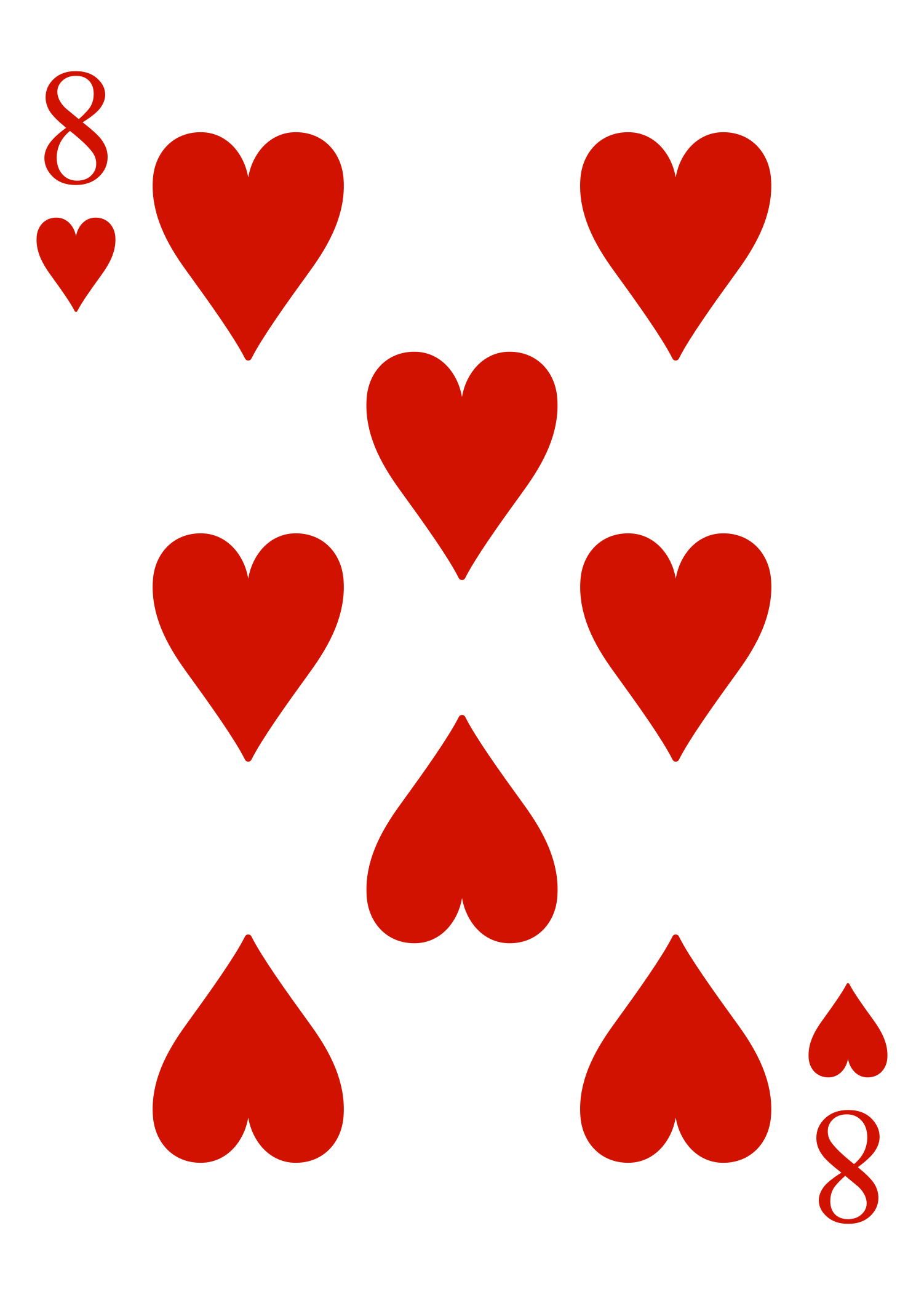
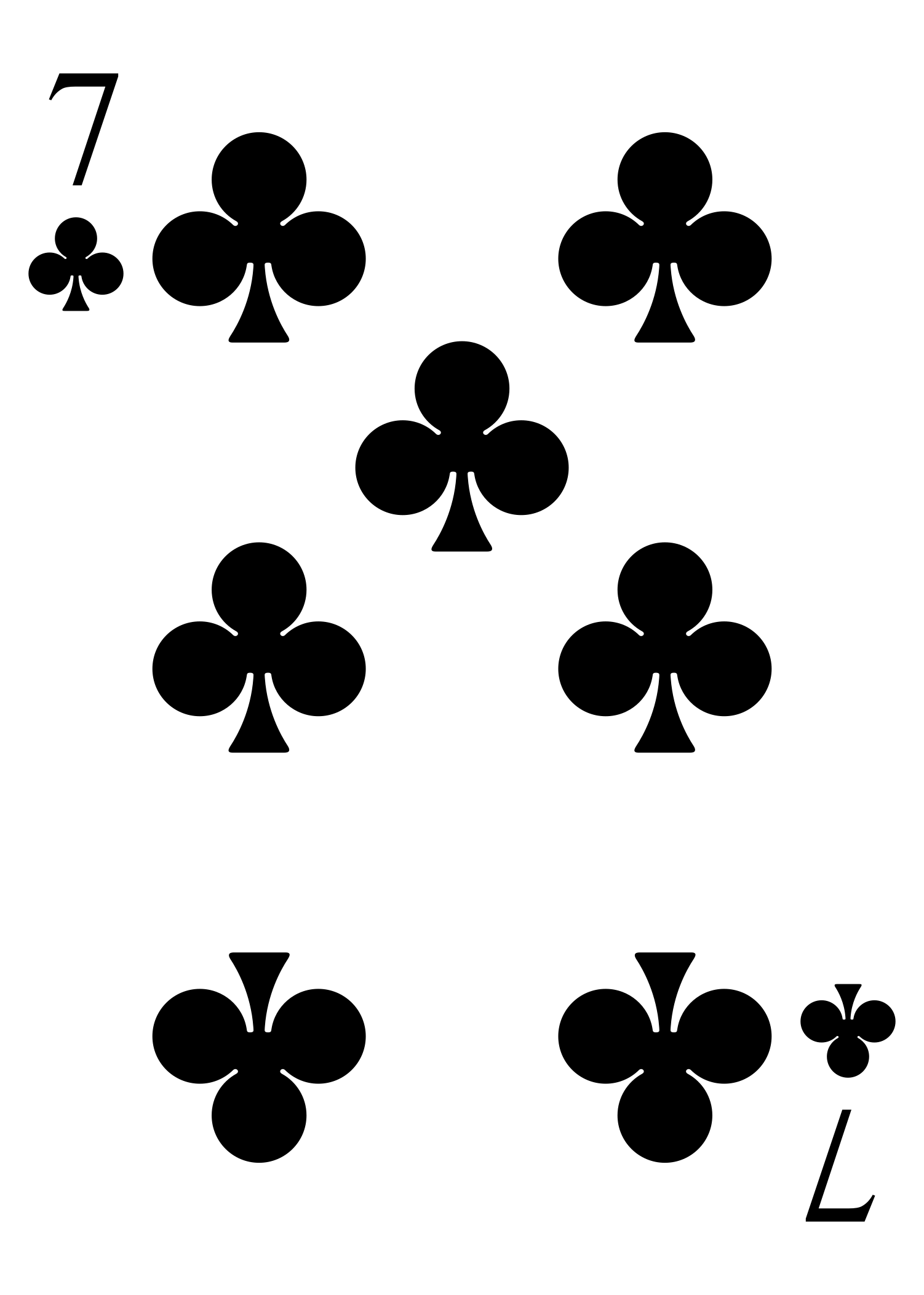
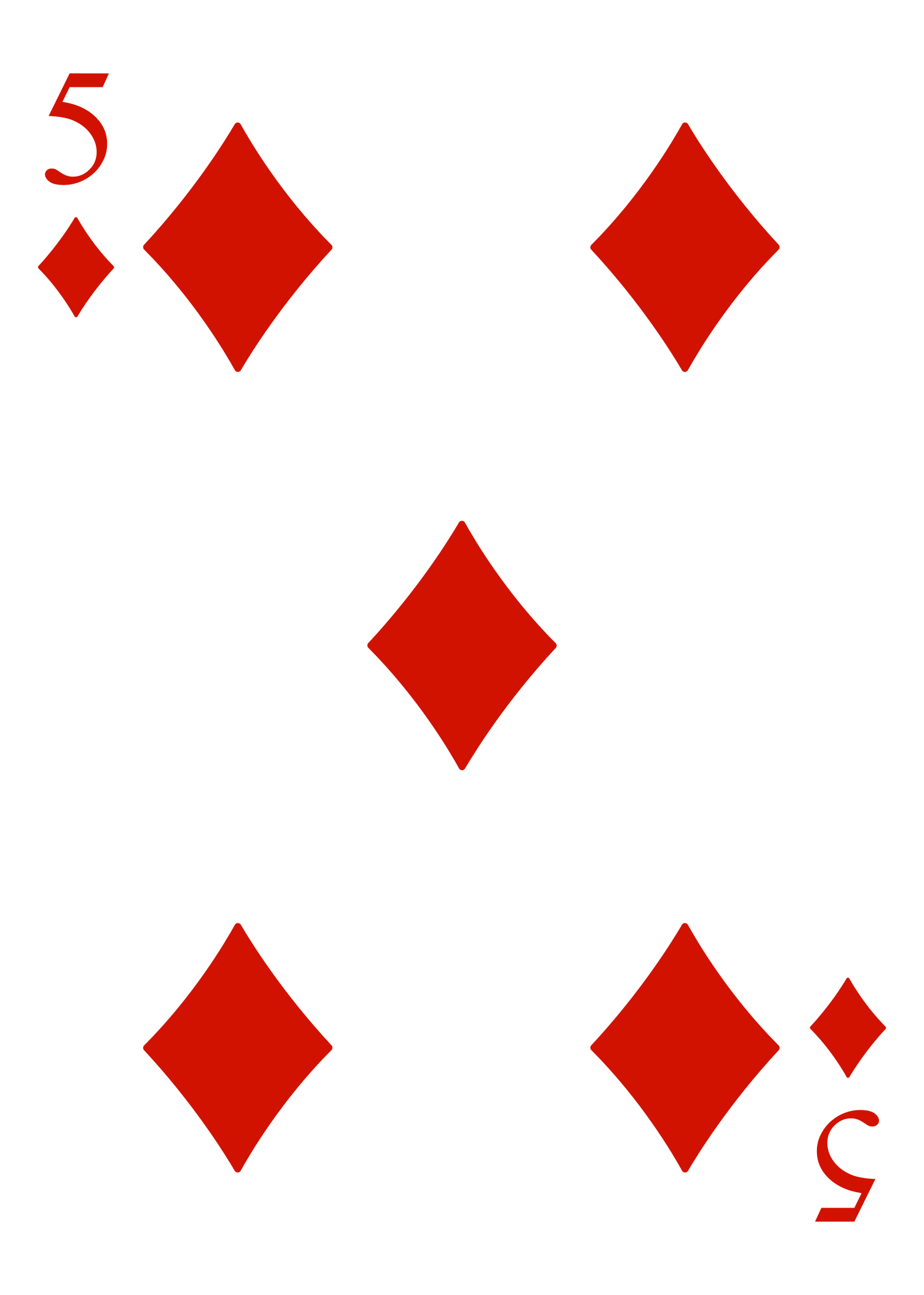
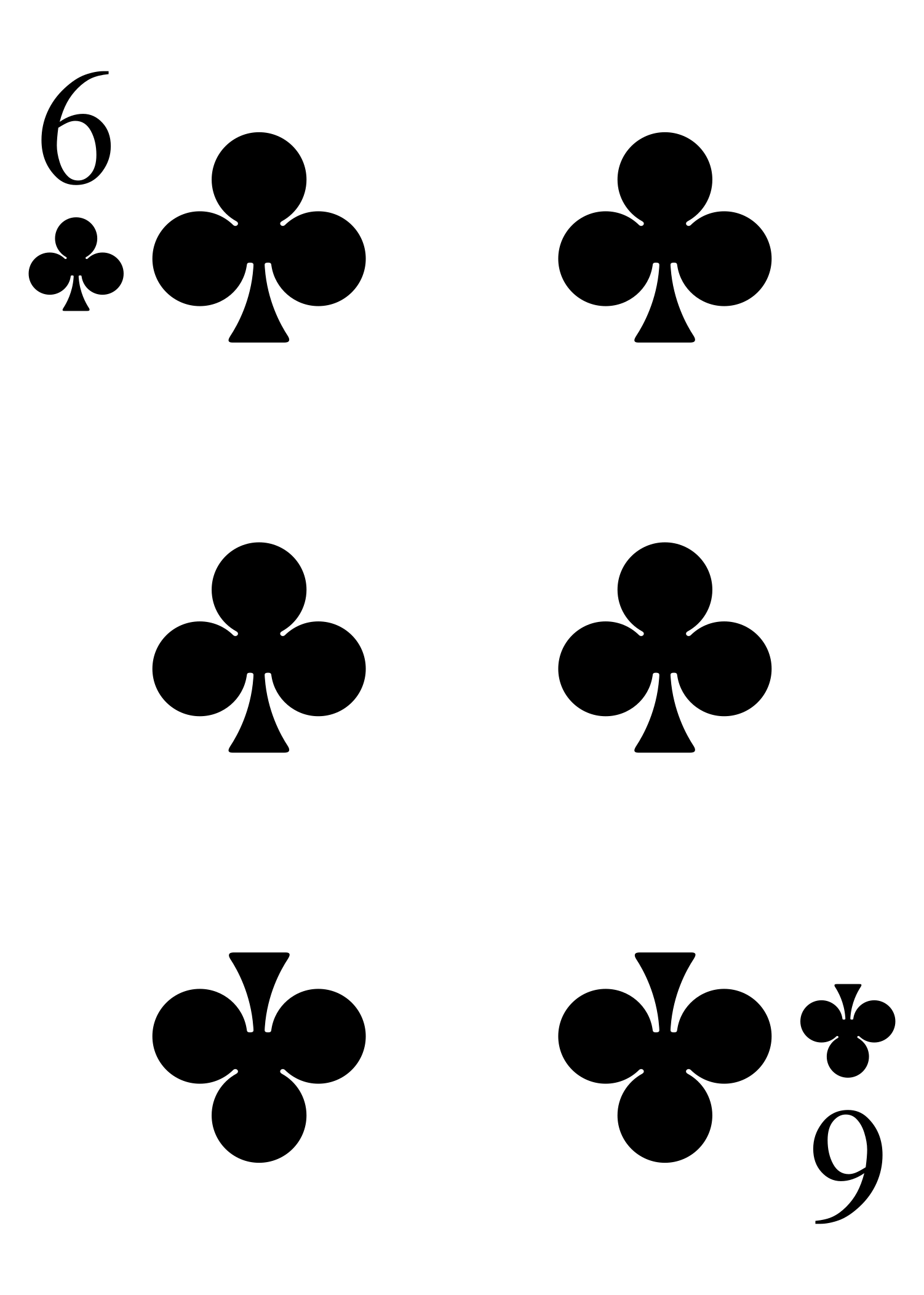
Also resist color-perfect tidying that reveals nothing. Moving a red 8 onto a black 9 may look organized, but if the red 8 was supporting a black 7 and the move opens no card, you have narrowed the board. A stronger move either increases information, access, or usable space.
Five mistakes that cost most games
Most stalled games come from one of these five choices.
1 Drawing before scanning the tableauFix: Scan first +
A fast stock tap can bury the fact that a reveal move was already available. Once new waste cards appear, attention shifts and the free tableau move is forgotten.
Better move: Pause before every draw and scan foundation starts, hidden-card reveals, useful transfers, and King access in that order.
2 Building one foundation too far aheadFix: Keep colors close +
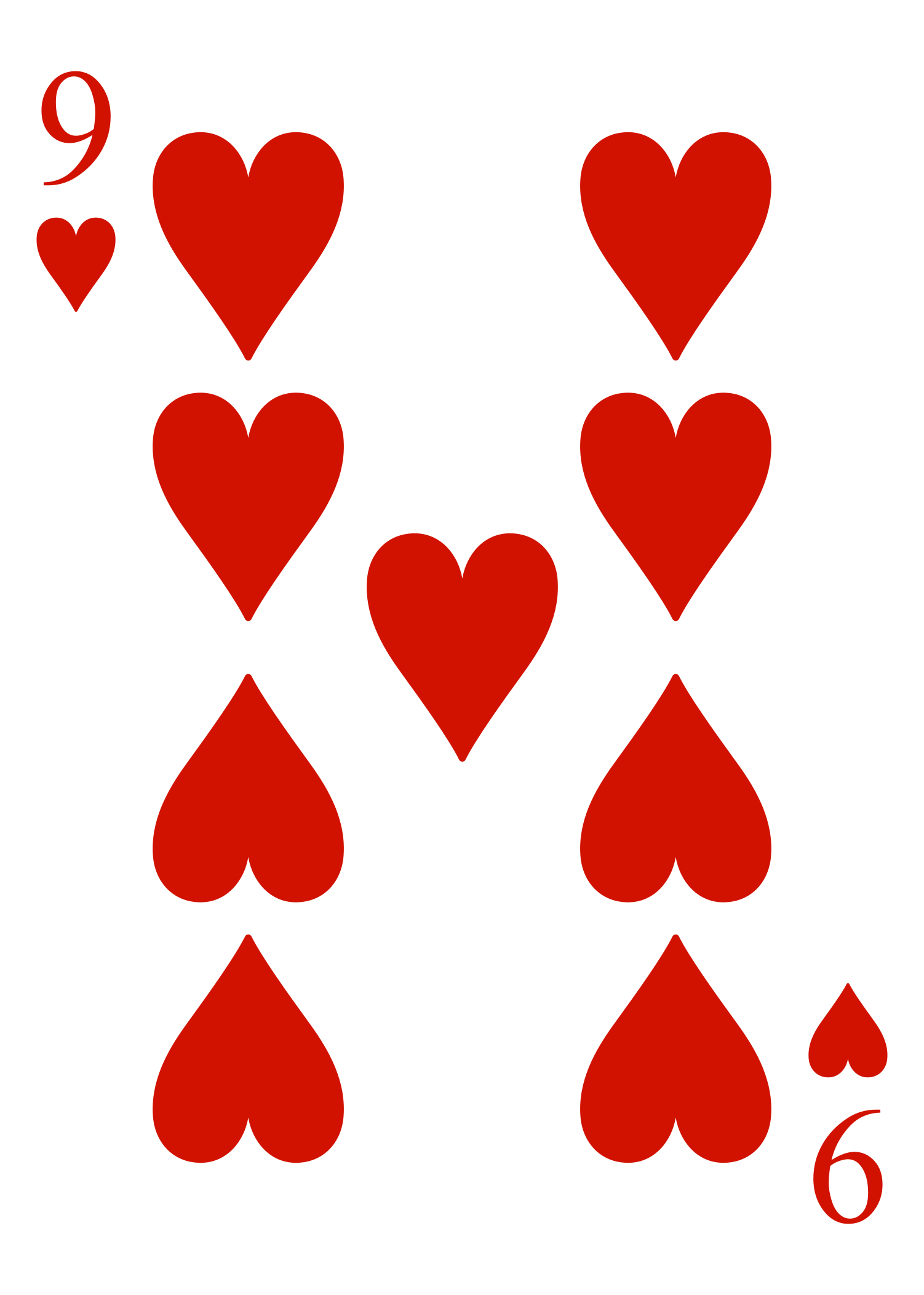
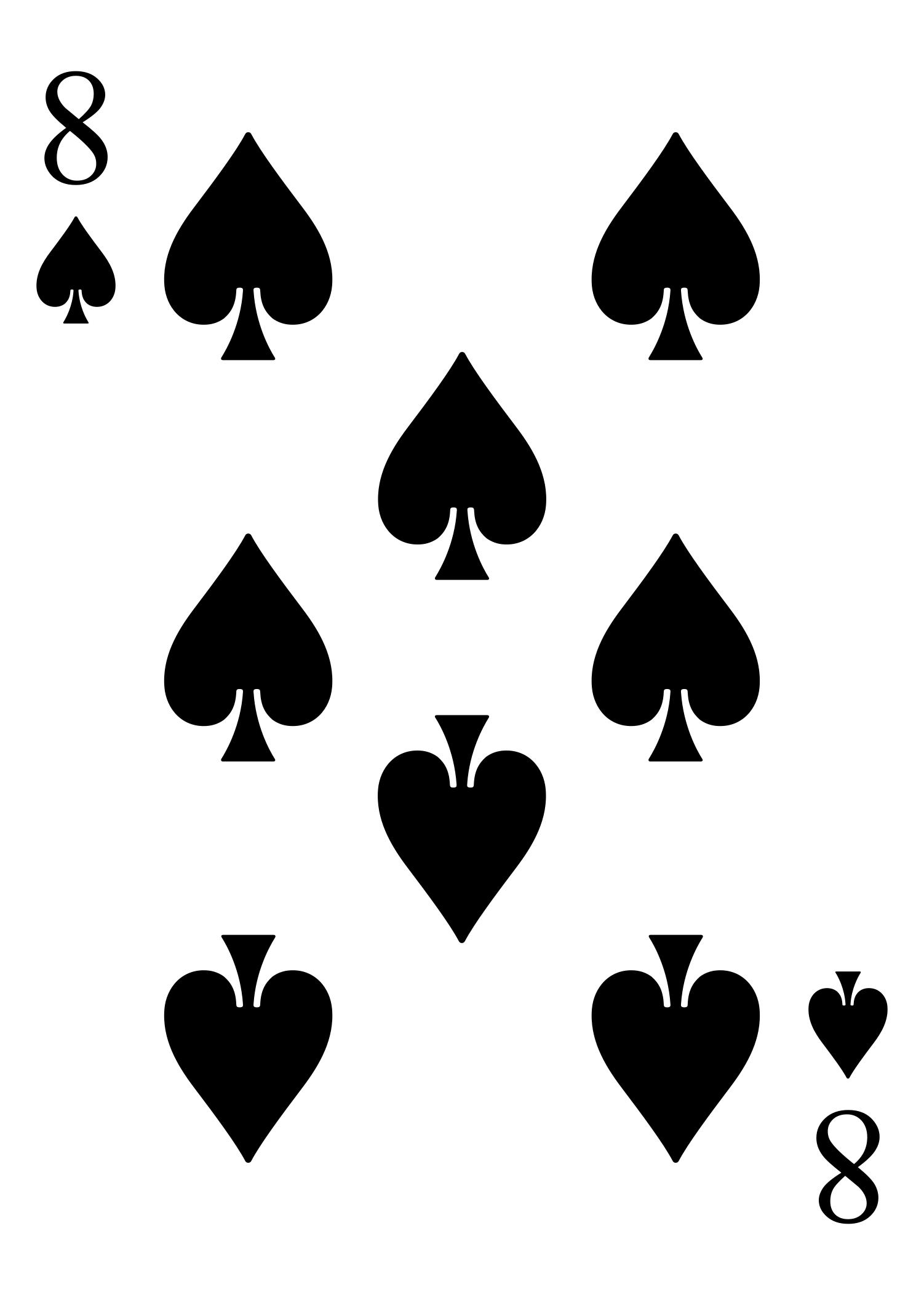
A high foundation removes ranks that still serve as alternating-color supports. The tableau then looks open but cannot accept the next buried card.
Better move: Keep opposite-color foundations within a few ranks unless advancing one suit immediately uncovers or releases something important.
3 Clearing a column without a King planFix: Name the King +
The empty space cannot accept an ordinary card, so the effort used to create it produces no new move and may have dismantled a useful run.
Better move: Name the King, the sequence attached to it, and the card it will expose before you clear the final card from a column.
4 Choosing the first legal KingFix: Compare both Kings +
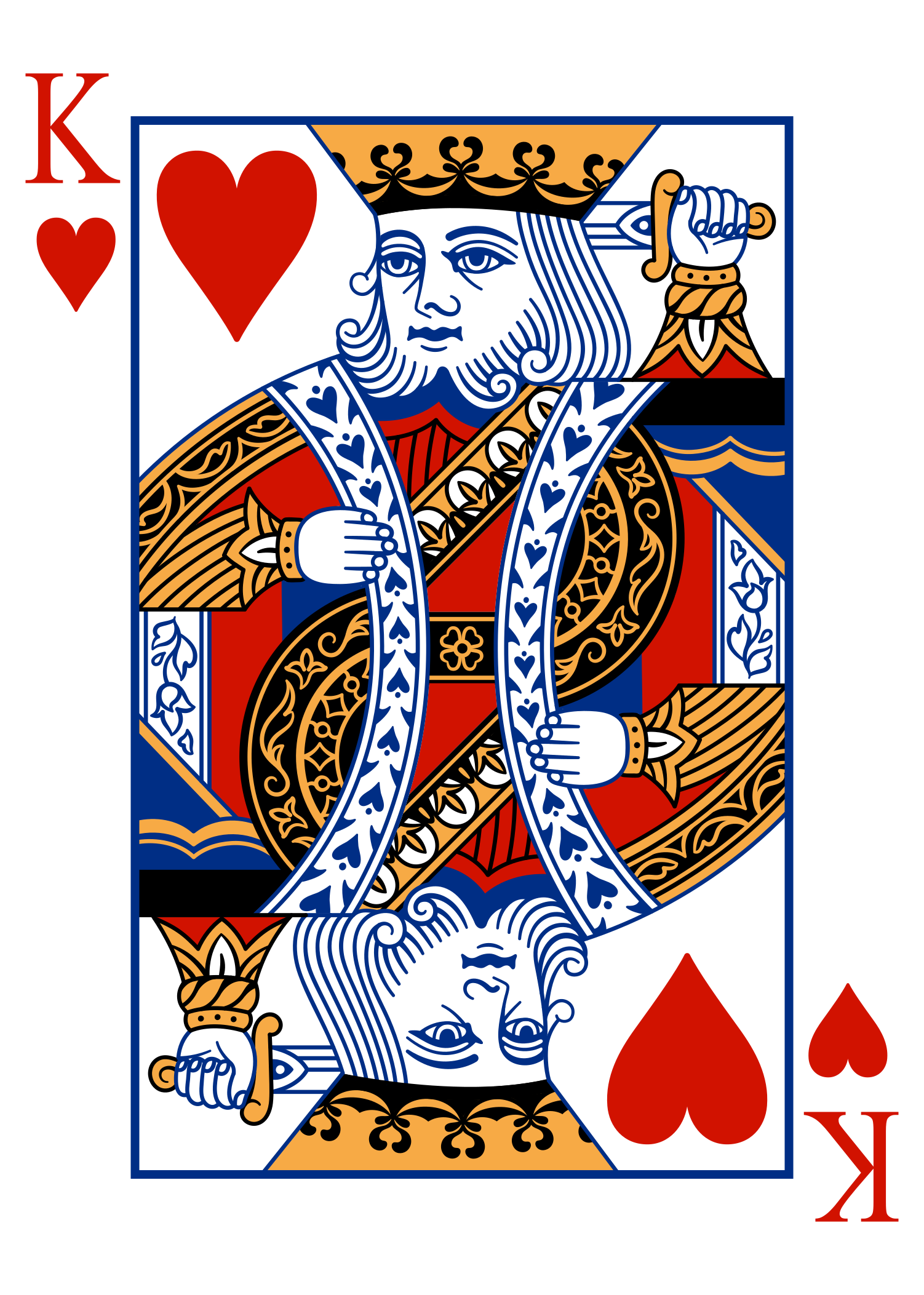
Two Kings can lead to very different futures. The wrong color may have no Queens available, while the other would collect several blocked sequences.
Better move: Compare color demand, run length, and the newly exposed card. If neither King helps, preserve the empty column.
5 Repeating a stock cycle without changing itFix: Change the order +
Seeing the same inaccessible cards again is evidence that the order must change. Another identical pass cannot produce a different top card.
Better move: Find one reachable stock or tableau play that shifts access. If none exists after a full scan, use the <a href="/solitaire-no-moves-checklist">no-moves checklist</a> before restarting.
Practice deliberately
Use the fixed deal below. Your goal is five foundation cards—not finishing fast.
How to practise this deal
A useful practice deal has a narrow objective. On this fixed board, build five cards to the foundations without treating every legal move as progress. Scan the tableau before each draw, keep higher cards available as supports, and use undo when you want to compare two branches.
Lesson 01 — Build five cards without closing the tableau
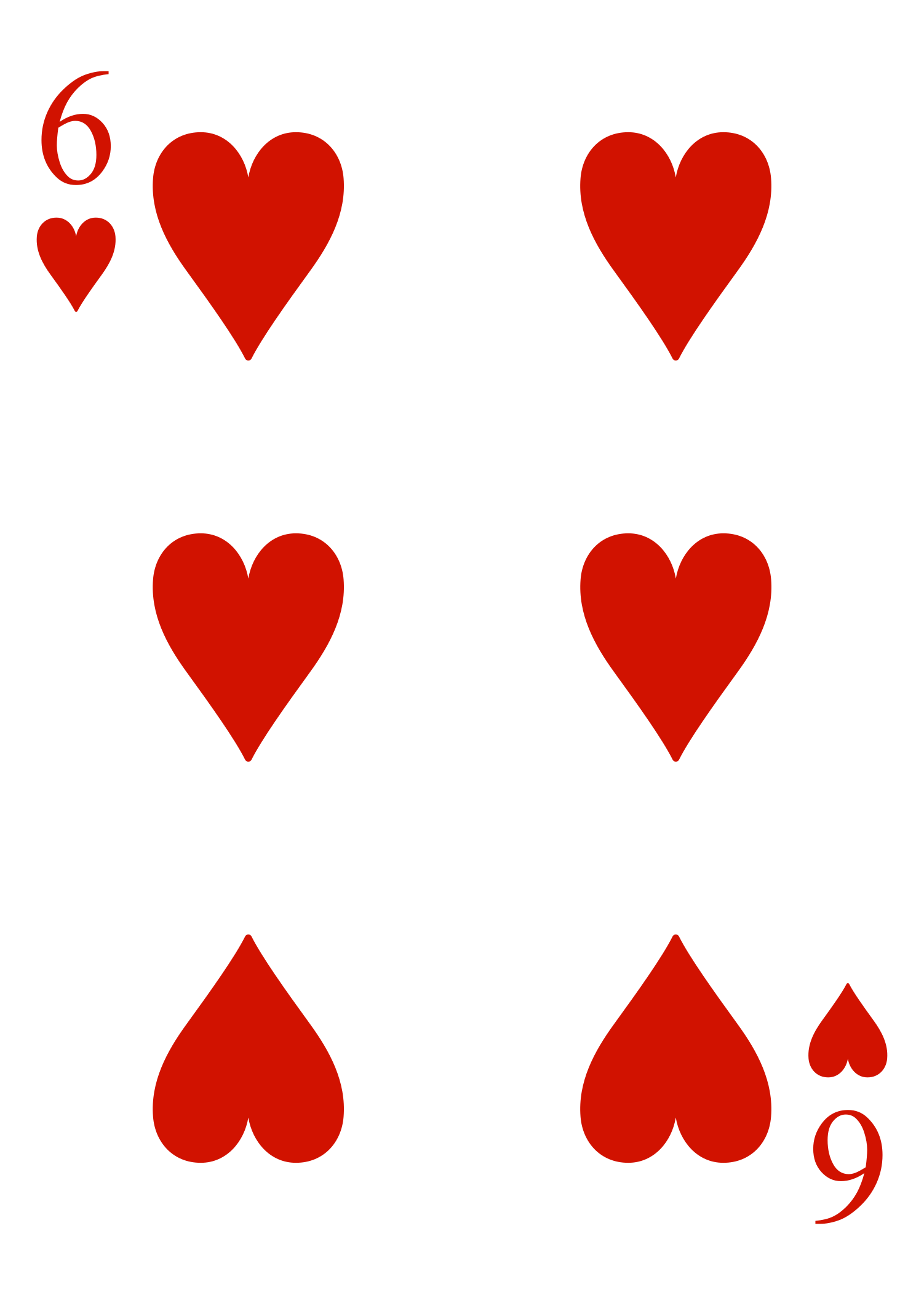
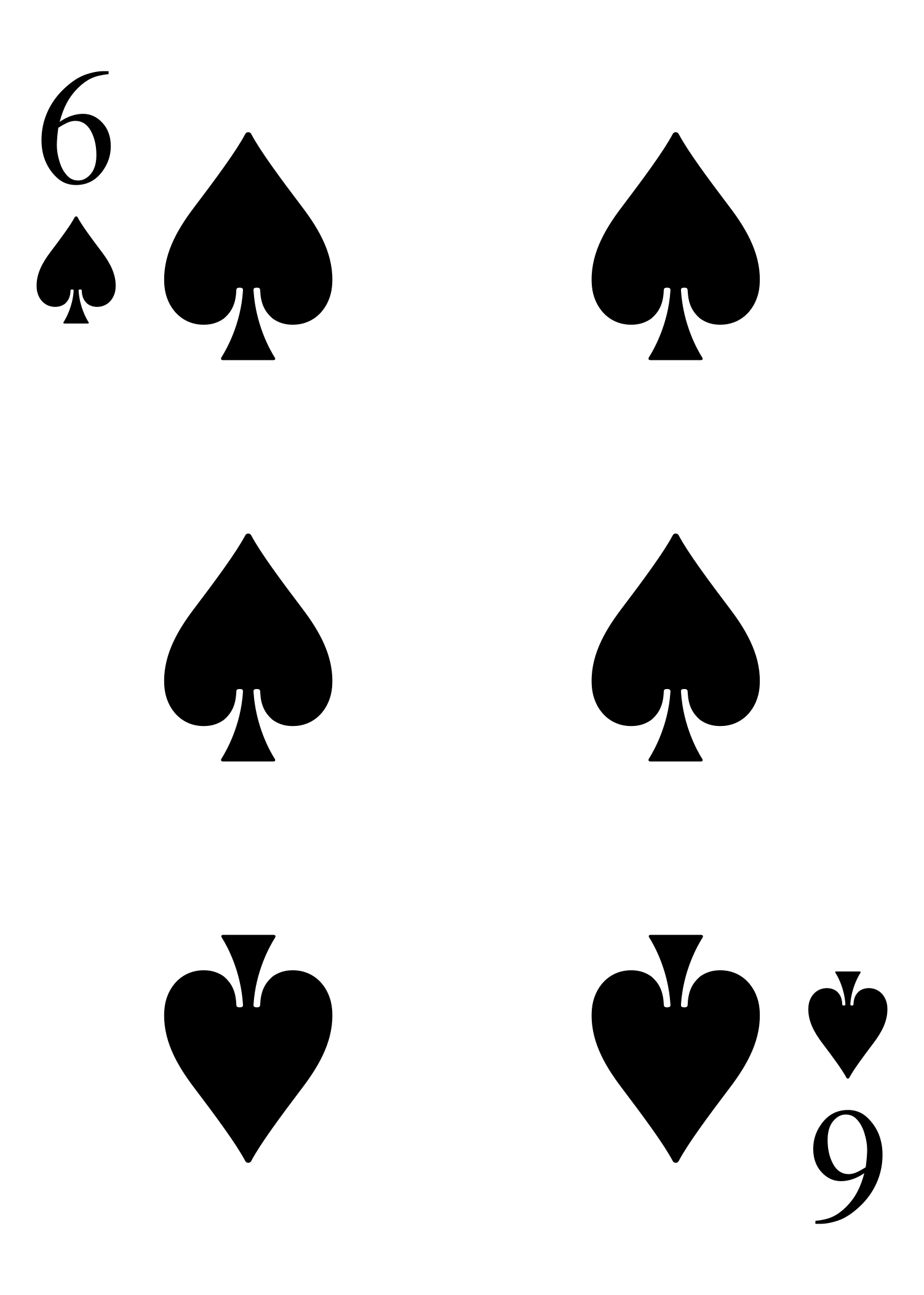
This solver-proven draw-1 deal opens with 6♥ in column 5. Move it to either 7♠ in column 3 or 7♣ in column 7; both legal moves expose the hidden card in column 5. Use Undo to compare the two branches, rescan the tableau, then continue until five cards reach the foundations. Restart always returns to this authored deal. Afterward, use the same scan on a daily winnable challenge, where the deal is shared and guaranteed to have a finish.


Solitaire strategy FAQ
Can every game of solitaire be won?
No. The published thoughtful-play estimate puts Draw 1 solvability at ≈ 79–82%, so some shuffled deals have no winning line. Players on this site currently finish 31%; strategy helps close the gap, but it cannot rewrite an impossible deal.
Can you win solitaire in 30 seconds?
It is possible on an unusually cooperative deal, especially with automatic foundation moves, but thirty seconds is a speed-run result rather than a useful target. Strong practice emphasizes accurate scans and repeatable decisions first; speed follows when those decisions become familiar.
Does using undo count as cheating?
No. Undo is a rule of this version of the game and is included in the measured player results. Use it deliberately to compare two plausible branches and learn why one position is stronger. Repeated random moves teach less than a specific branch comparison.